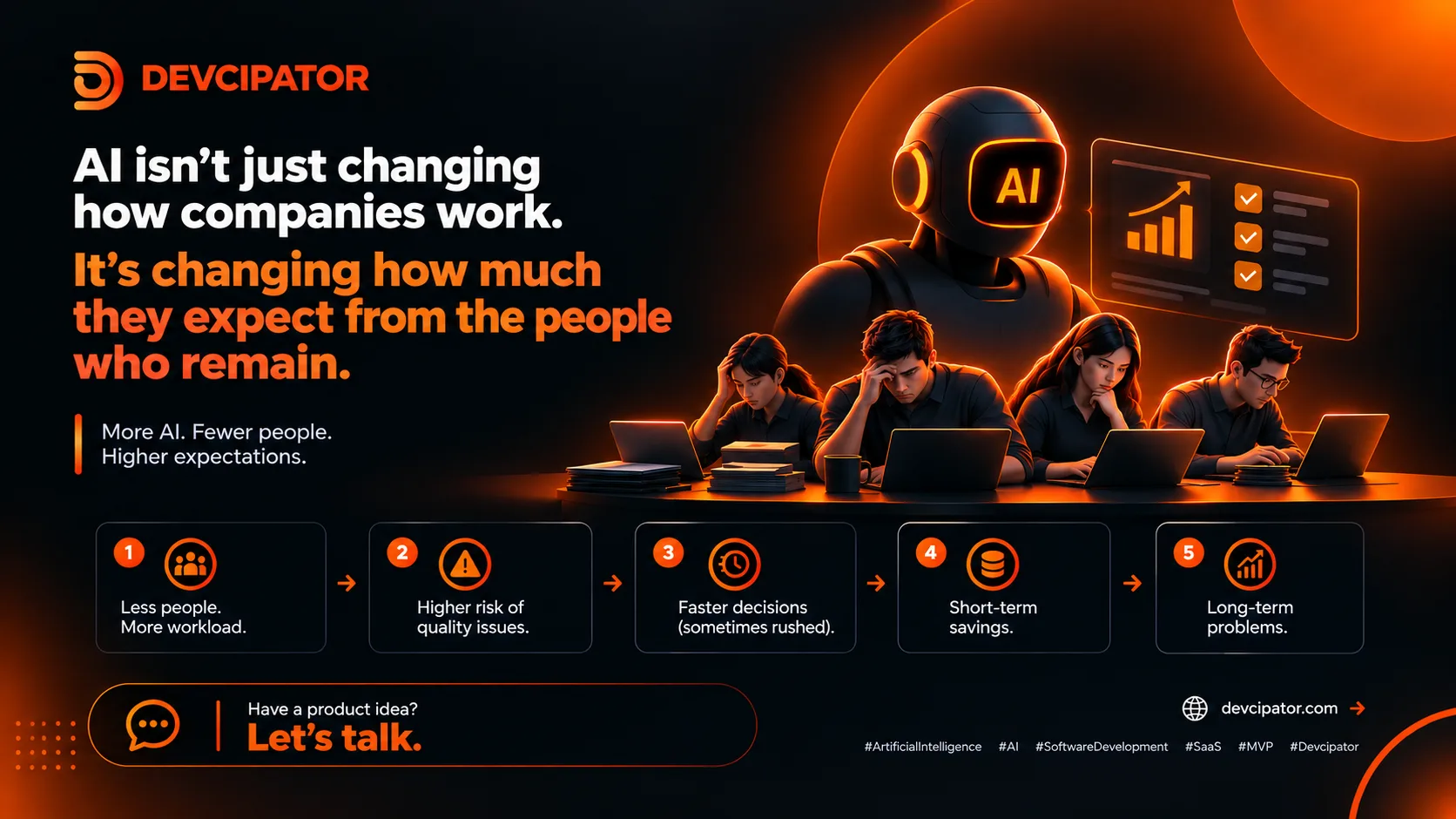
AI isn't just changing how companies work. It's changing how much they expect from the people who remain.
Across industries, businesses are rethinking what productivity means. The pattern is becoming familiar: adopt AI tools, reduce headcount, and expect smaller teams to deliver more. On paper, it looks like a smarter, leaner business model. Costs go down, output goes up, and the spreadsheet looks great.
But there's a catch.
Doing more with fewer people is not the same as building a better business. In the short term, the numbers can be convincing. Over time, the cracks tend to show.
Teams become overloaded. When expectations rise faster than capacity, the people who remain absorb the extra work. AI can speed up tasks, but it doesn't remove the need for thinking, reviewing, coordinating, and supporting customers. Burnout becomes a real risk, and burned-out teams don't build great products.
Product quality suffers. Faster output can quietly lower the bar. Code that is generated quickly still has to be tested, secured, and maintained. When there's no time for proper review, small issues pile up into bigger ones.
Decisions get rushed. With fewer people in the room and tighter timelines, there's less space for debate, user research, and careful planning. Decisions made in a hurry are often expensive to undo.
Short-term savings create long-term problems. Technical debt, unhappy users, and fragile systems all come with a bill. It just arrives later.
Every new AI model promises to make development faster. And it's true: building has never been quicker. But speed alone doesn't guarantee a reliable product, a better user experience, or a business that can scale.
A fast launch of the wrong product is still the wrong product. A quickly built app with a confusing experience still loses users. And an MVP that can't grow past its first hundred customers is a prototype, not a foundation.
What separates lasting products from forgettable ones is judgment: understanding the problem, making thoughtful trade-offs, and building something people actually want to use. AI can support that process, but it can't replace it.
None of this means AI is the problem. Used well, it's a powerful ally. The question is what you point it at.
Instead of asking, "How many people can we remove?" the better question is, "How can AI help the team we have build something better?" That might mean:
Automating repetitive work so people can focus on design, strategy, and problem-solving.
Prototyping ideas faster so you can test them with real users sooner.
Catching issues earlier through better testing and review workflows.
Freeing up time for the careful decisions that shape a product's future.
In this model, AI doesn't shrink the ambition of a business. It expands what a capable team can achieve without sacrificing quality.
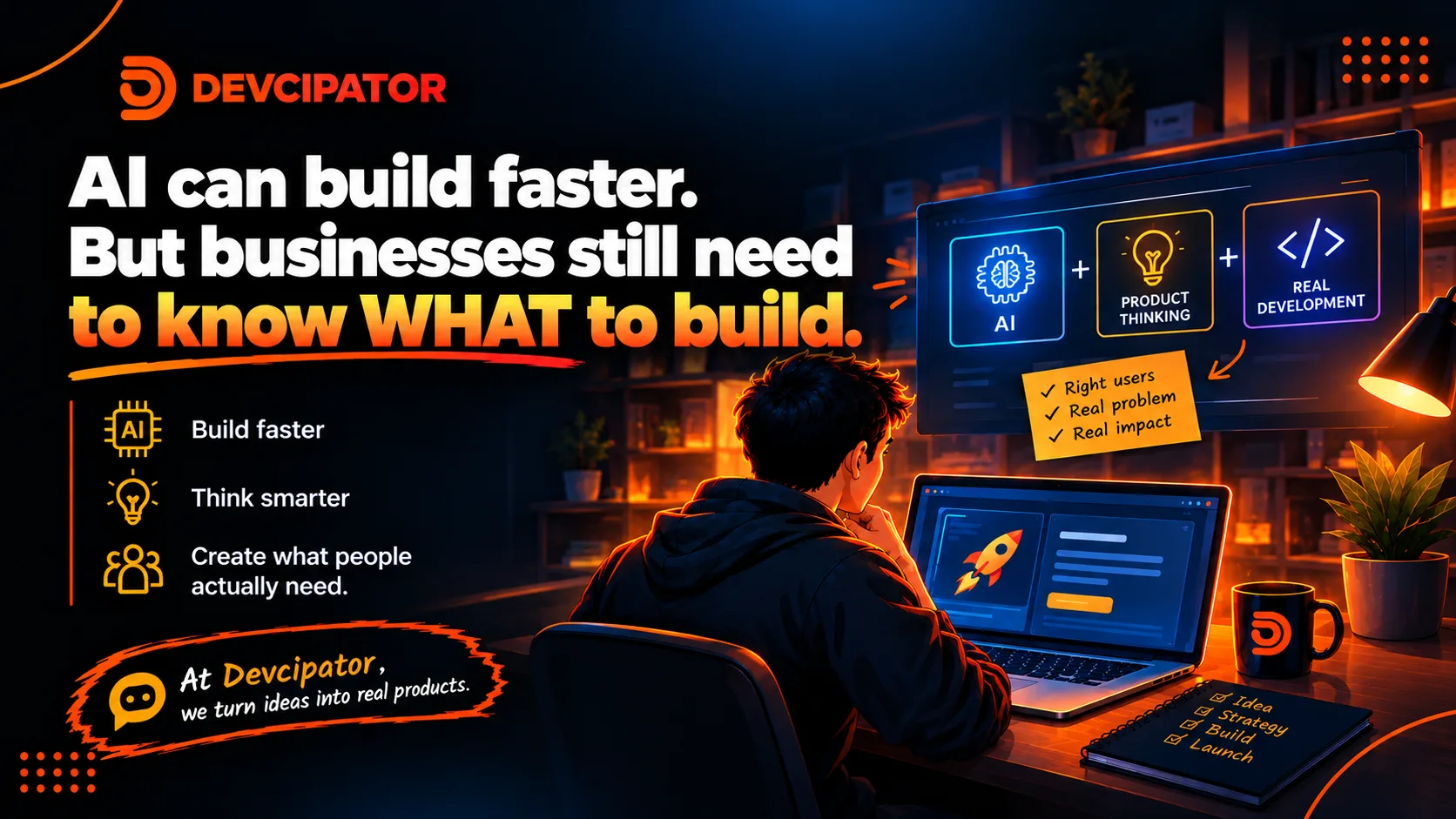
At Devcipator, we believe the real opportunity isn't simply replacing work with AI. It's using AI to build smarter, solve real problems, and create products that deliver lasting value.
That means pairing modern tools with sound engineering, clear thinking, and a focus on the people who will actually use what we build. Whether it's a web app, a SaaS platform, or an MVP, our goal is the same: a product that works well today and can grow with your business tomorrow.
The goal shouldn't just be to do more with less.
It should be to build better with what you have.