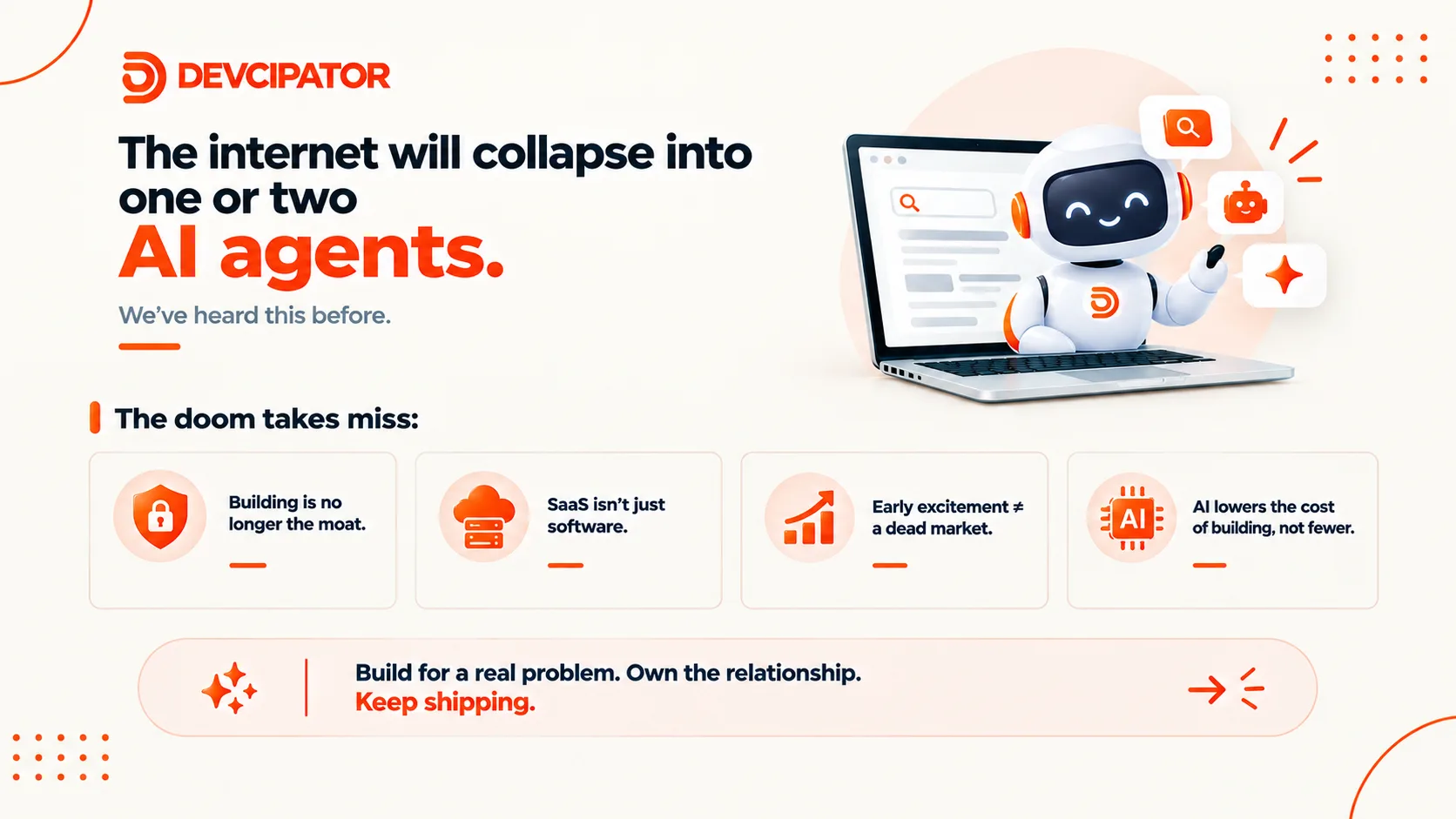
Will AI agents replace SaaS? It's the question behind a growing claim: that the whole internet will shrink down to one or two AI agents, micro-SaaS is already dying, and everything else will merge into a single platform.
We've heard versions of this before. Search was going to make websites obsolete. Mobile was going to kill the web. No-code was going to end software development. Each time, the tools got more powerful and the market got bigger, not smaller.
AI is a real shift, and it will change a lot. But "everything collapses into one agent" misreads how businesses actually work.
The doom argument goes like this: if anyone can copy a workflow with an AI model, no one needs to buy software anymore.
The first half is true. Building has become cheaper and faster than ever. But when code is easy to produce, it stops being the thing that sets a company apart. What matters instead:
Trust: customers choose products they believe will still work next year.
Distribution: a great tool nobody knows about is still invisible.
Data: products that learn from real usage get better in ways a fresh copy can't match.
Support: someone has to answer when something breaks at 2 a.m.
None of these come from a prompt.
When a team pays for a SaaS product, they're rarely paying for the code alone. They're paying for compliance, uptime, security, integrations, and accountability. They're paying for a vendor who is responsible when things go wrong.
A copied workflow can replicate features. It can't replicate responsibility. For any business running real operations, with real customers, real money, and real legal exposure, that distinction matters enormously.
It's easy to look at the enthusiasm around AI tools and conclude the old way is finished. But excitement tells you what people are experimenting with today. It doesn't tell you what a company will bet its operations on tomorrow.
New tools get layered on top of old ones, integrated into existing systems, and gradually reshaped into something sturdier. The winners are rarely the first to the demo. They're the ones who make the tool dependable.
When the cost of making something drops, people make more of it. Cheaper publishing gave us more writers, not fewer. Cheaper video gave us more creators, not fewer. AI will do the same for software.
Yes, there will be more noise. But there will also be more niches served, more problems solved, and more room for focused teams that understand their customers deeply. The real question isn't whether products survive. It's who solves a real problem best.
If you're building right now, the playbook is simpler than the panic suggests:
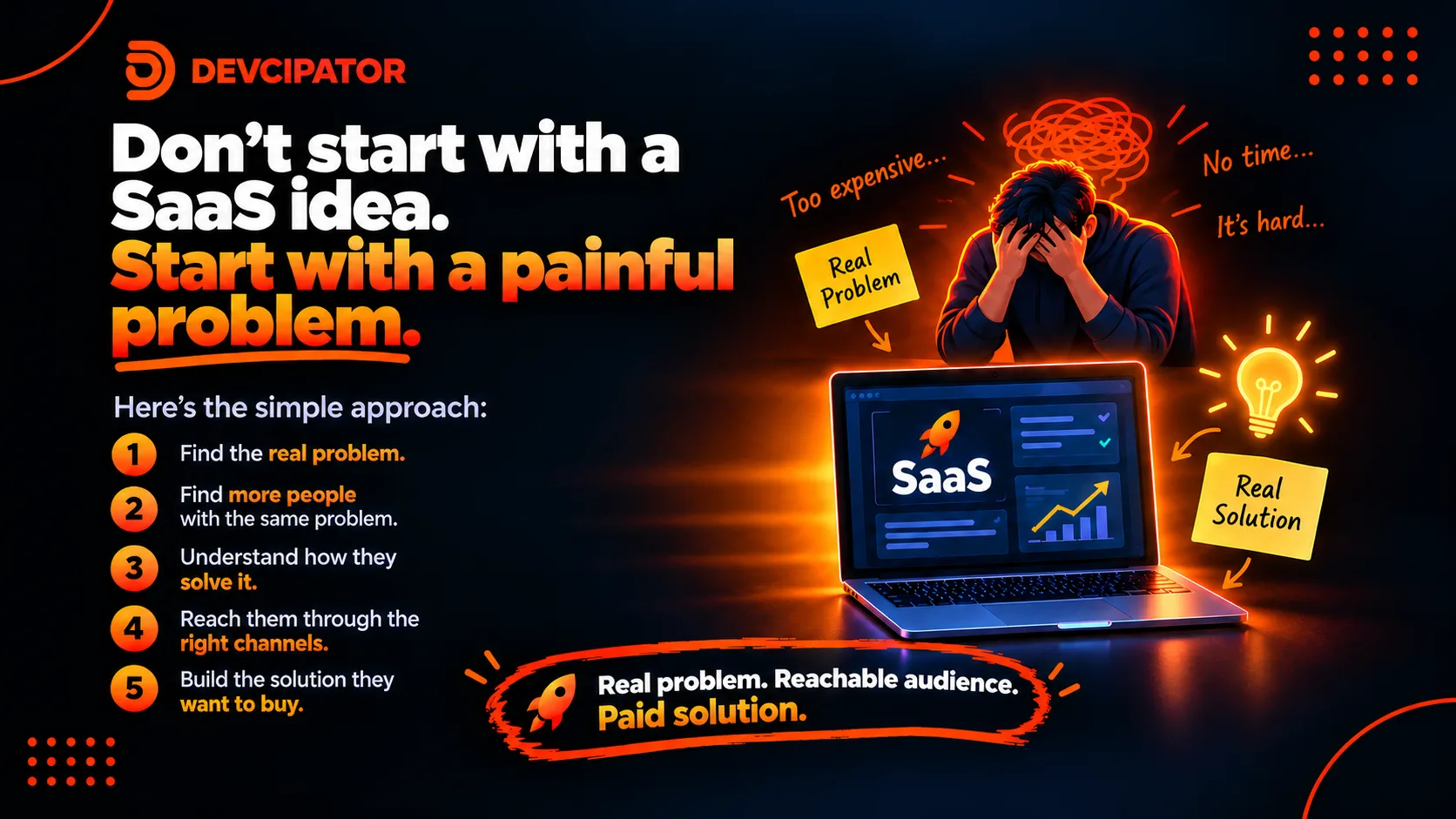
Start with a real problem. Features are easy to copy. Deep understanding of a customer's pain is not.
Own the relationship. Be the company people trust, talk to, and recommend.
Use AI as leverage. It should make your team faster and your product better, not replace your thinking.
Keep shipping. Momentum compounds, especially when others are frozen by fear.