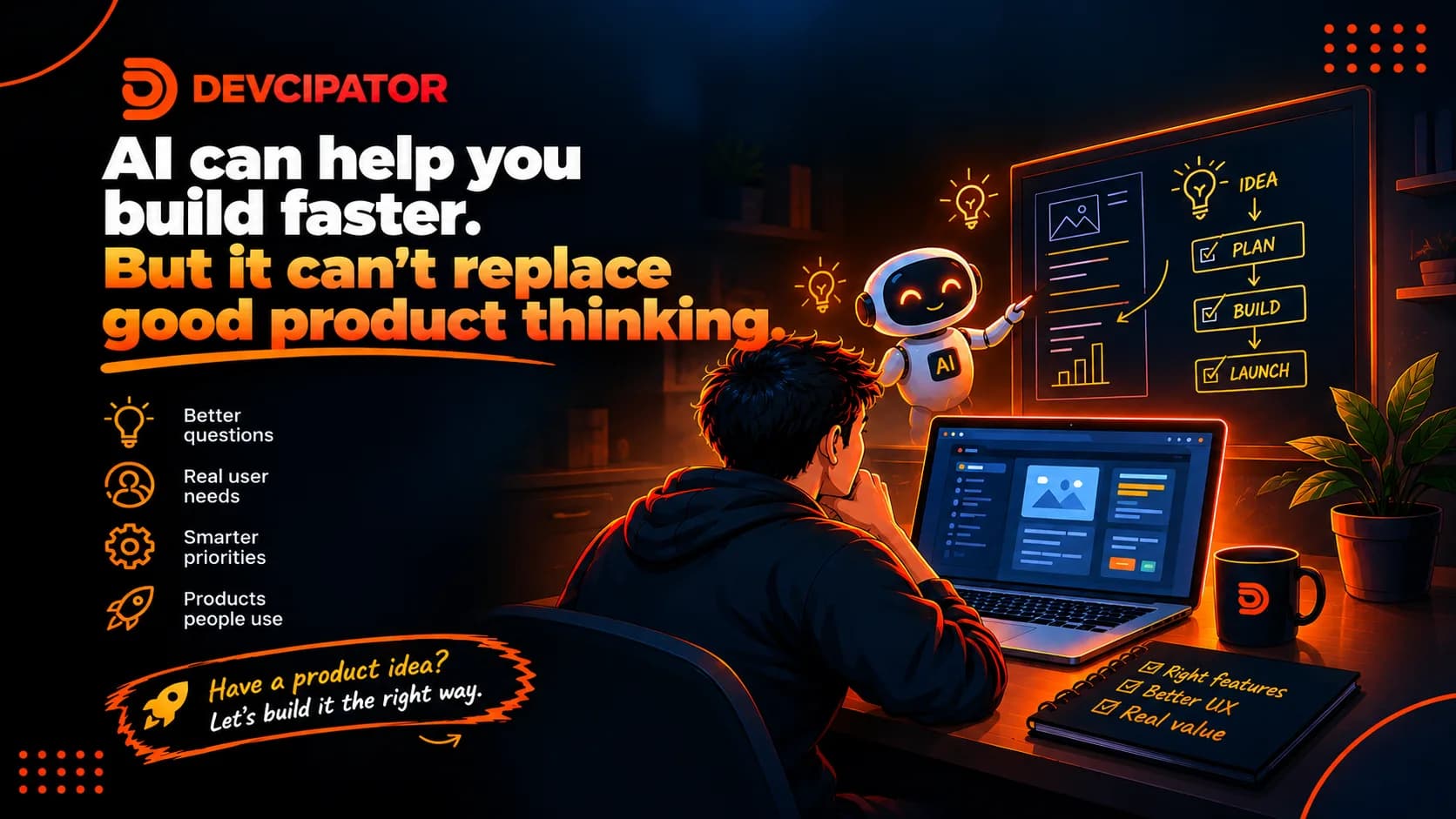
AI Can Build Faster, But Product Thinking Builds the Right Product
AI is changing the way businesses build websites, SaaS platforms, mobile apps, and MVPs. Today, almost anyone can use AI to generate code, create a landing page, or build a prototype in a matter of days.
But building faster does not guarantee building the right product.
Many products fail not because the development was poor, but because they solved the wrong problem, targeted the wrong users, or included features that customers never needed.
That is why product strategy and product thinking are more important than ever.
When businesses come to us with an idea for a website, SaaS product, mobile app, or MVP, the first challenge usually isn't writing code.
The important questions come before development begins:
What should we build first?
What problem are we actually solving?
What do our users really need?
Which features should we include in the MVP?
Which features can we leave for later?
How should the product work?
How can we turn the idea into something people will actually use?
AI can accelerate development, but these decisions require an understanding of users, business goals, market demand, and product strategy.
Before investing time and money into development, define:
Understand your target users, their needs, frustrations, and expectations.
A strong product starts with a specific problem rather than a long list of features.
Prioritize the features that directly support your product's core purpose.
Not every idea needs to be part of the first version. Removing unnecessary features keeps development focused.
Define the user journey, workflows, and interface before development gets too far.
AI has made software development faster and more accessible. But that speed can create a new problem: building too much, too quickly.
When development becomes easier, teams may be tempted to add more screens, features, integrations, and complexity.
More features do not automatically create a better product.
A focused product that solves one important problem well can be more useful than a complex application trying to solve everything at once.
Speed is only an advantage when you're moving in the right direction.
A Minimum Viable Product (MVP) helps you test your idea with real users before making a large investment in development.
Instead of building every planned feature, start with the smallest version of your product that can:
Solve the core user problem
Deliver real value
Be tested by real customers
Generate useful feedback
Validate your product concept
Once you understand how users respond, you can improve and expand the product based on real-world feedback.
Feature prioritization is a critical part of successful SaaS and MVP development.
Every feature you remove from the first version can save development time, reduce costs, and make the product easier to use.
The goal isn't to build fewer features forever.
The goal is to build the right features at the right time.
A great product idea is only valuable when users can understand and use it easily.
Good product design focuses on:
Simple user flows
Clear navigation
Intuitive interfaces
Fast and efficient workflows
User needs rather than assumptions
The best product experience makes the solution feel simple, even when the technology behind it is complex.
AI is a powerful development tool. It can help businesses:
Generate code faster
Build prototypes
Automate repetitive development tasks
Create UI concepts
Speed up testing
Accelerate MVP development
But AI does not replace product strategy.
Someone still needs to determine:
Who the product is for
What problem it solves
Which features matter
What should be built first
How users should interact with it
How the product should evolve
The real value comes from combining AI-powered development with strong product thinking.
The future of software development isn't simply about building faster.
It's about using faster development tools while making better product decisions.
Whether you're building a SaaS platform, AI application, web app, mobile app, or MVP, start by validating the problem, understanding your users, defining the scope, and creating a focused product strategy.
Then use AI and modern development tools to bring that product to life.
AI can significantly speed up coding, prototyping, and development. However, it cannot independently determine which features your users need, who your target customers are, or what your product strategy should be. Those decisions require product thinking and market understanding.
Product thinking is the process of understanding user problems, defining product goals, prioritizing features, and deciding what to build before and during development.
Start with the core problem your product is designed to solve. Include only the features necessary to solve that problem and provide value to your initial users. Additional features can be added after collecting real user feedback.
AI can assist with research, analysis, prototyping, and development, but product strategy still requires human judgment about users, business goals, priorities, and market needs.
MVP development allows startups to test their product idea with real users before committing significant resources to a full-scale product. It can help validate demand, collect feedback, and identify which features should be developed next.
At Devcipator, we help businesses turn ideas into practical digital products, including web applications, SaaS platforms, AI-powered applications, and MVPs.
Our approach focuses on more than just development. We help define the product, prioritize features, design user flows, and build the technology needed to turn the idea into a usable product.
If you have a product idea, let's build it the right way.
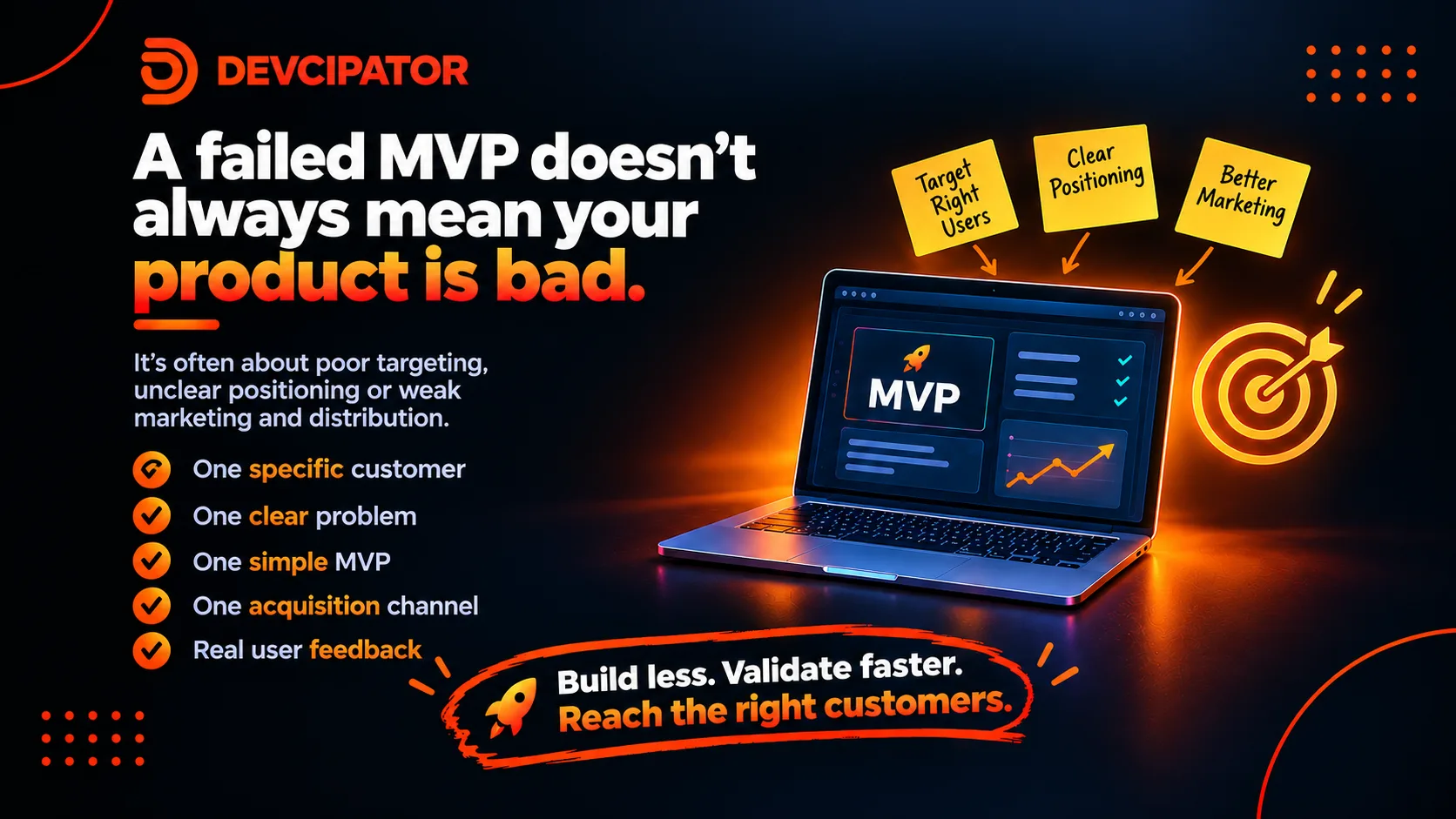
A failed MVP doesn't always mean a bad product. Often the real culprits are vague customer targeting, unclear positioning, and weak distribution. Here's what to fix before you add another feature.
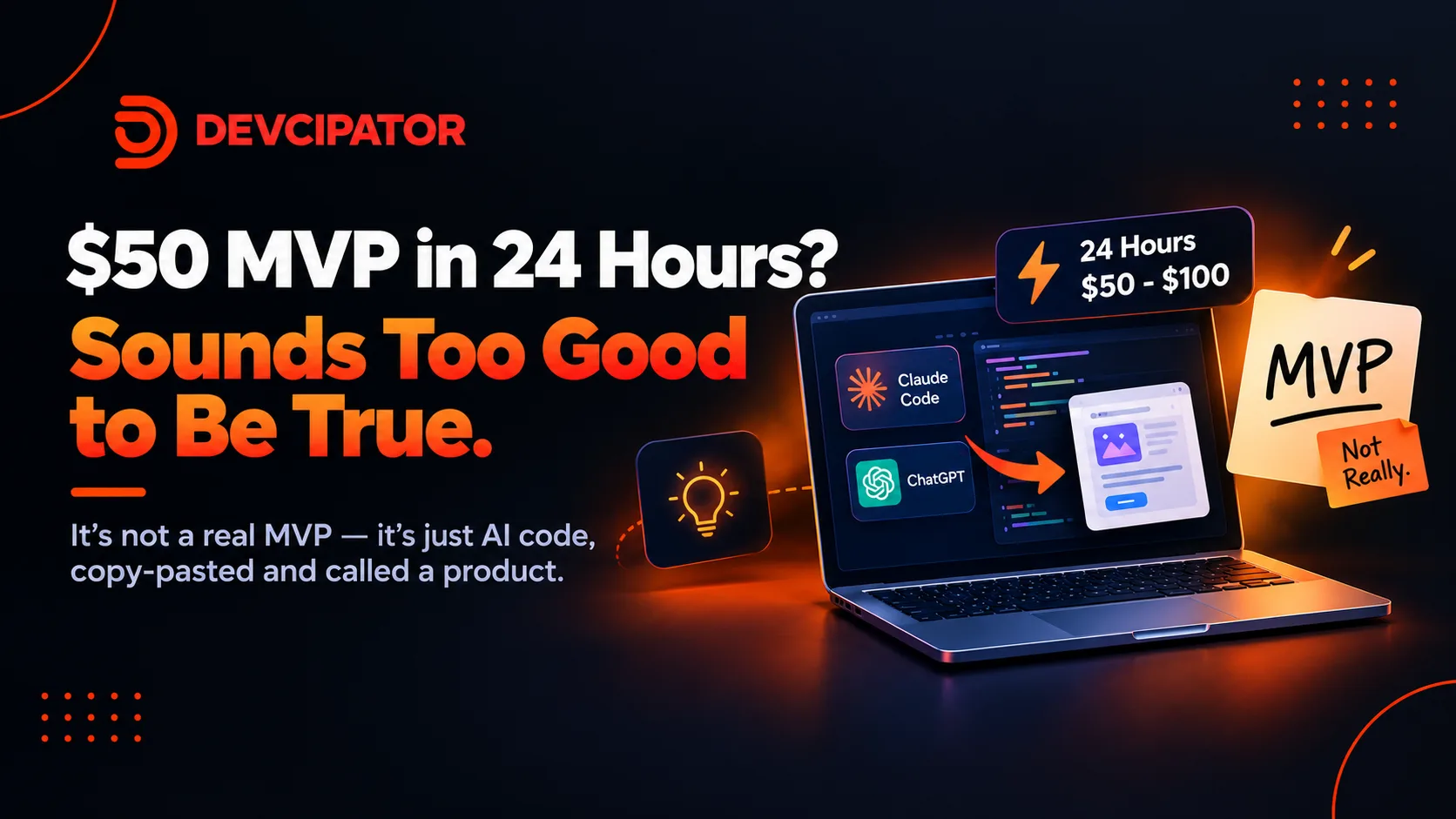
Promises to build your MVP in 24 hours for $50 aren't building anything. They're running your idea through Claude Code and ChatGPT and calling the output a product. Here's why that's a problem and what to ask before you pay for one.
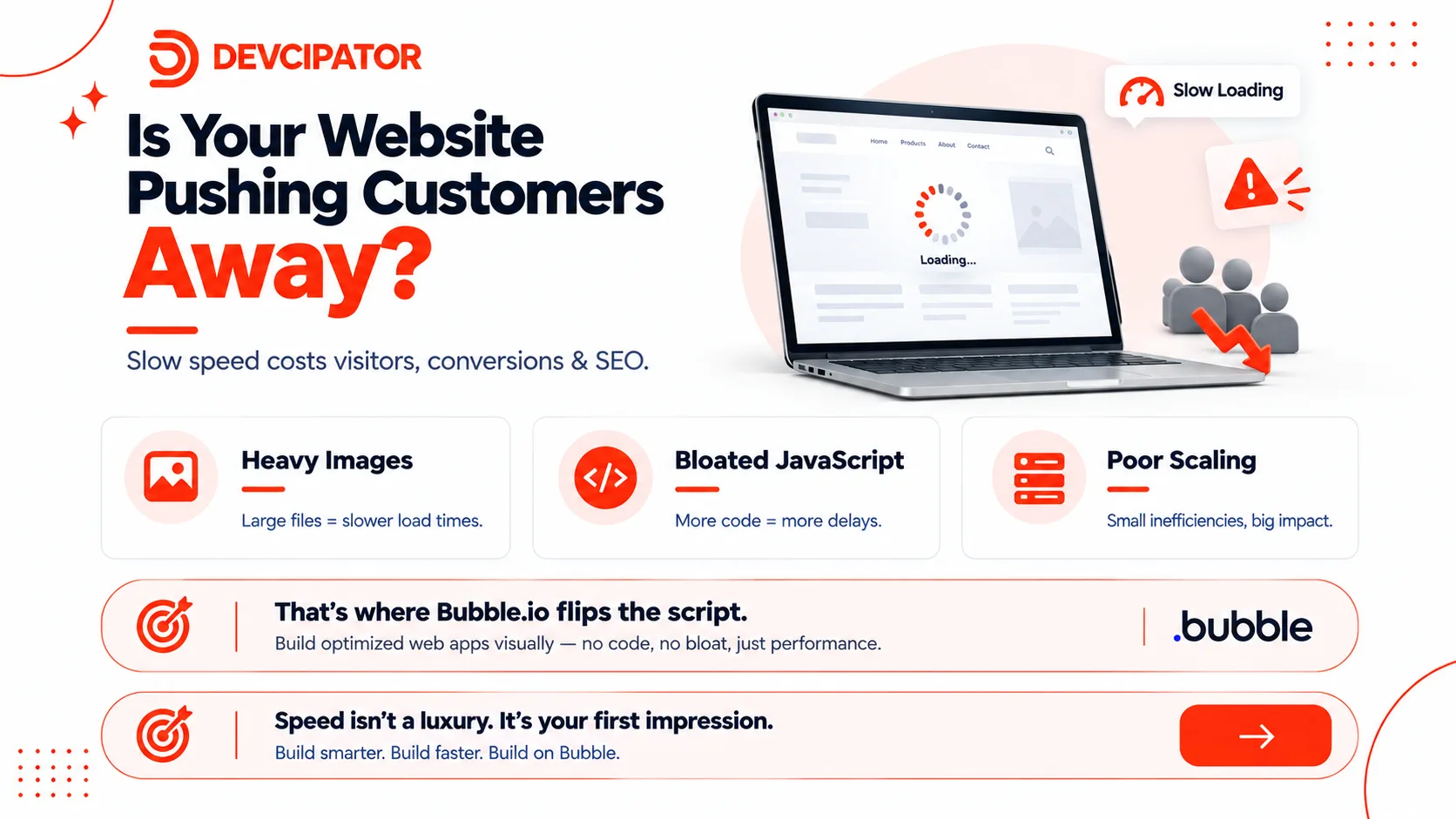
Every extra second of load time is a small tax on your business, paid in lost visitors, lower conversions, and a quieter search ranking.
