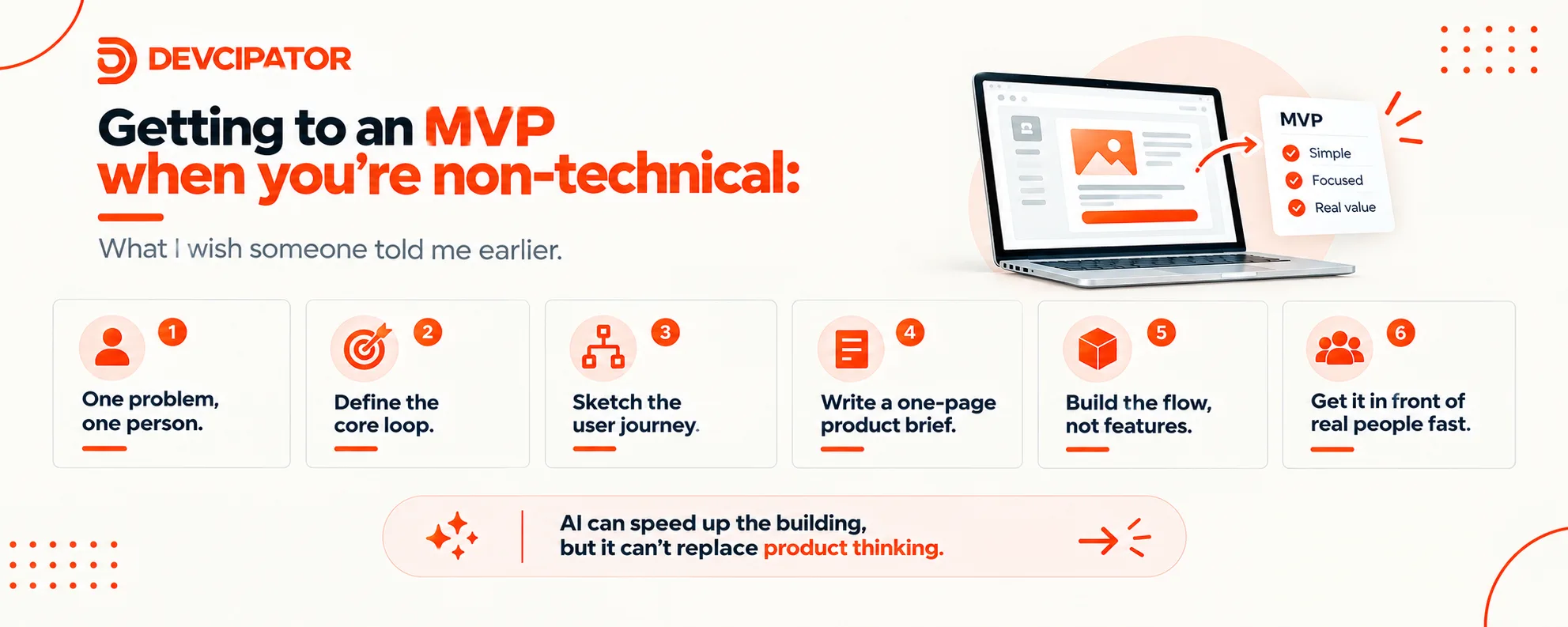
AI tools have made it possible for almost anyone to build software. But if you're a non-technical founder, you've probably noticed something: the building isn't the hard part. Knowing what to build is.
You've done the user research. You've had the conversations. You've spent hours with AI tools thinking through your idea. Then you start building feature by feature, and the result feels like a pile of parts instead of one product.
If that sounds familiar, you're not behind. You're at the point where the real work starts.
When you ask an AI tool to build one feature at a time, each piece can make perfect sense on its own. But nobody is holding the whole experience in mind: the flow, the feel, the reason the product exists. The result is a set of parts that work but don't add up to a product.
The fix isn't a better prompt. It's better product thinking before you build.
1. Start with one problem and one person
Skip "what features do I need?" and ask: Who exactly am I helping, and what is the one thing they're trying to get done? A narrow answer now saves you weeks later.
2. Define the core loop
What is the single action a user takes that delivers real value? For a walking and wellbeing app, that might be as simple as "start a walk, finish it, feel good about it." Everything else is a distraction until that loop works.
3. Sketch the journey before you build anything
Use paper, Figma, or even a Google Doc. Map the user flow screen by screen:
What does the user see first?
What do they do next?
How does each screen lead to the following one?
Where might they get confused or drop off?
The goal is for the whole product to exist on the page before it exists in code.
4. Write a one-page product brief
Keep it short and make it your source of truth:
Who it's for
The problem it solves
The core loop
What's in the MVP
What's explicitly out
Give this brief to your AI tool at the start of every session. It keeps every feature tied to the same vision.
5. Build the flow, not the features
Build the end-to-end journey first, even if it's rough. A simple version of the whole experience beats a polished version of one screen, because it lets you feel whether the product makes sense as a whole.
6. Get it in front of real people fast
Five users beat fifty opinions. Watch where they hesitate, what they skip, and what they ask about. Then adjust.
If you're working toward a deadline, such as an accelerator demo or an investor meeting, a smaller, coherent MVP will always land better than a bigger, messier one. Cut scope before you cut quality.
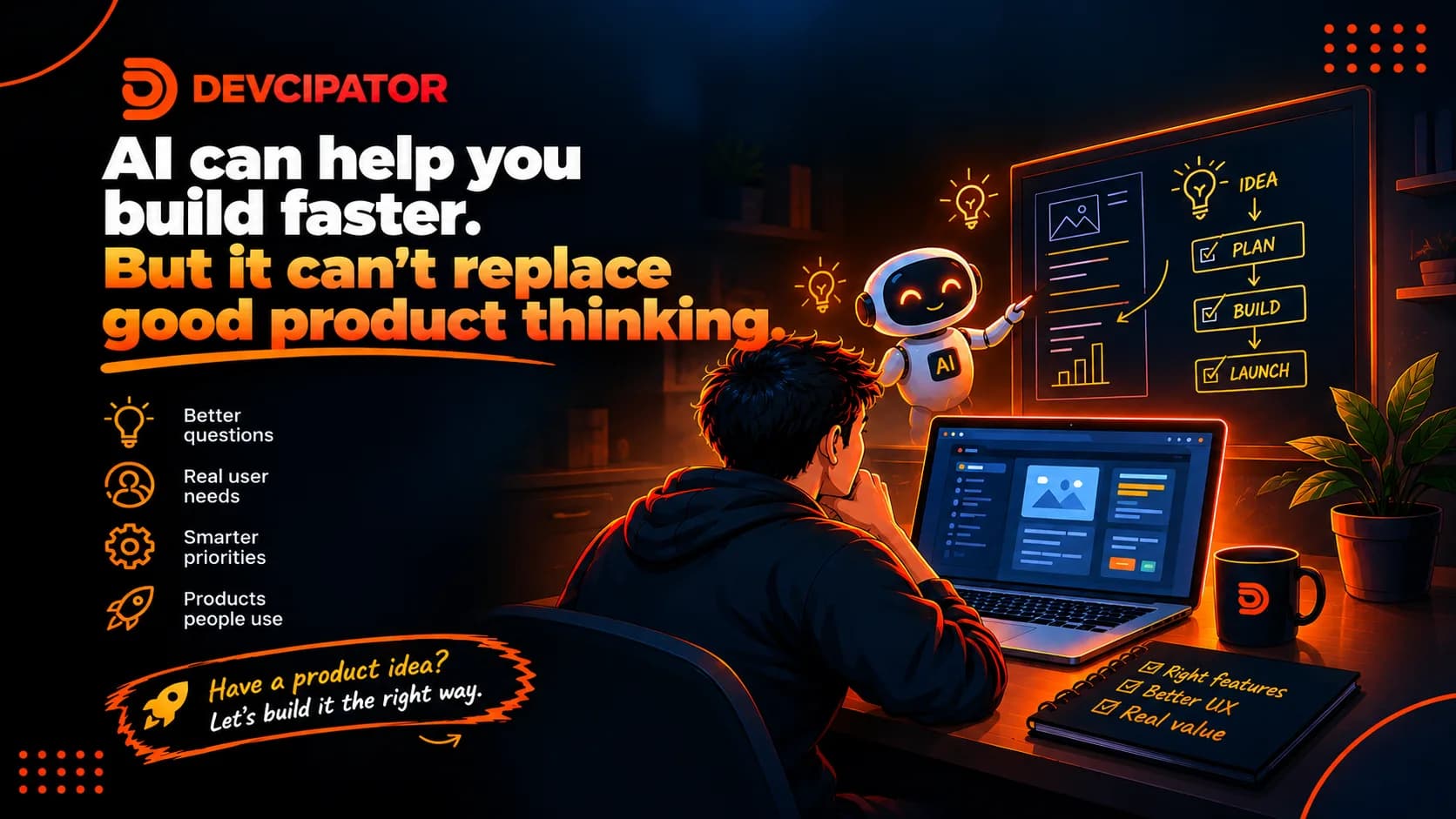
AI tools make building faster than ever, but knowing what to build still takes real product thinking. Here's why the hard part of launching a web app, SaaS, or MVP isn't development.
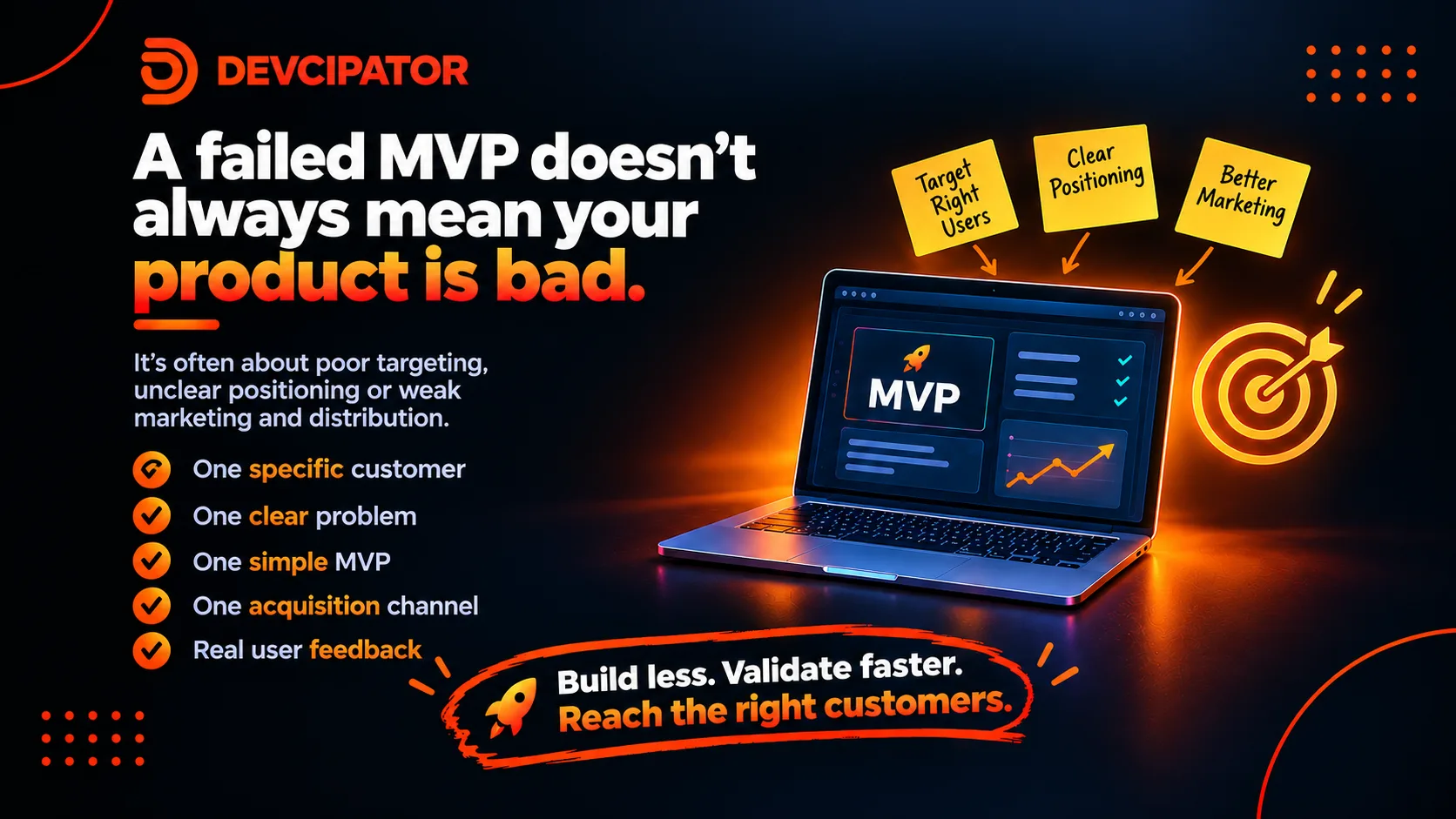
A failed MVP doesn't always mean a bad product. Often the real culprits are vague customer targeting, unclear positioning, and weak distribution. Here's what to fix before you add another feature.

Promises to build your MVP in 24 hours for $50 aren't building anything. They're running your idea through Claude Code and ChatGPT and calling the output a product. Here's why that's a problem and what to ask before you pay for one.
