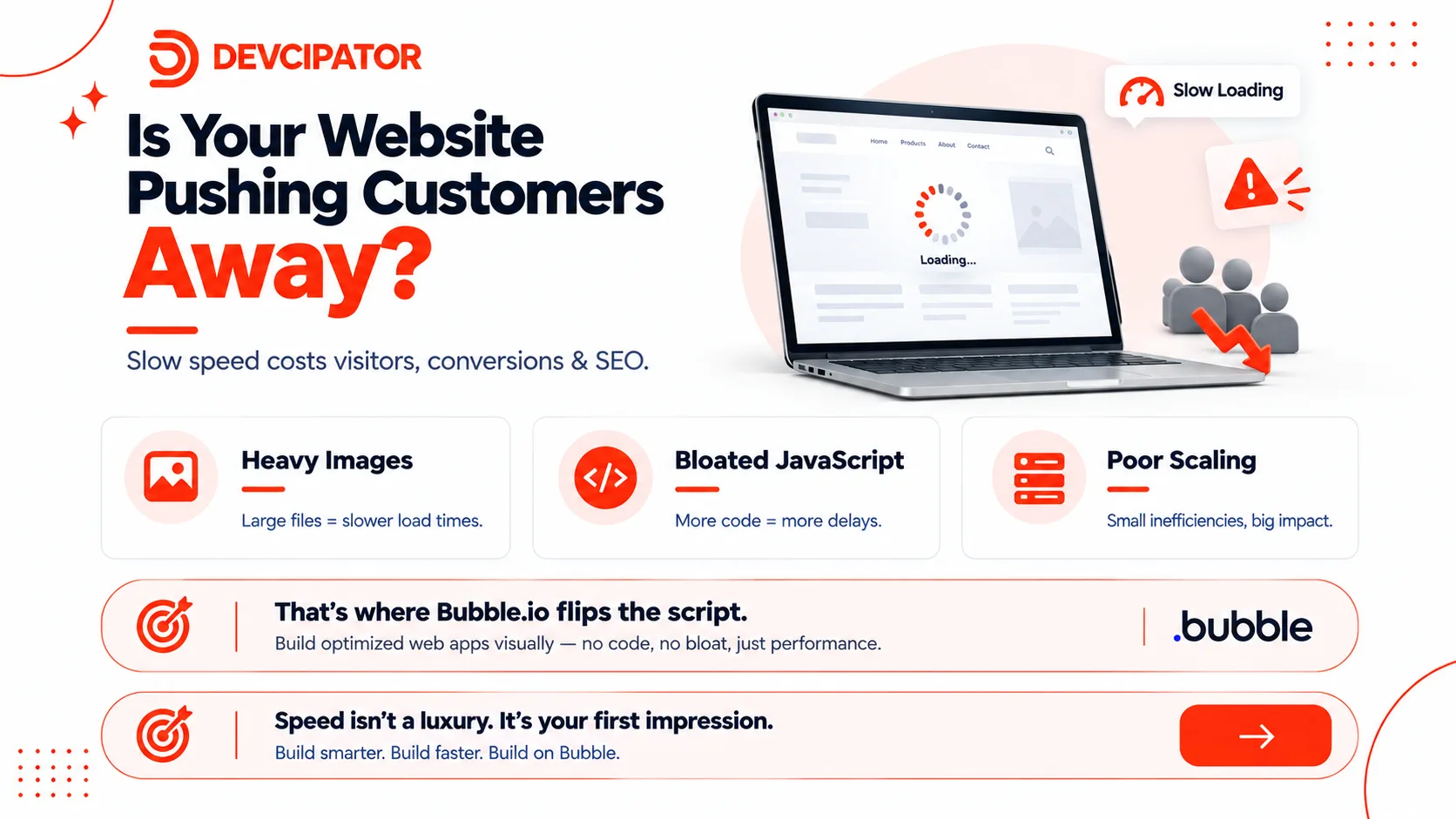
A slow-loading website doesn't just annoy people, it sends them away. And when visitors leave before the page even finishes loading, you're not just losing a moment of their attention. You're losing conversions, search visibility, and trust in your brand.
Speed has quietly become one of the most important factors in how a website performs, and it's one of the easiest to get wrong.
The relationship between load time and user behavior isn't subtle. As pages get slower, bounce rates climb and conversions fall. People don't wait around to find out if your site is worth it.
Slow sites are rarely slow for one dramatic reason. They're usually slow because of a handful of ordinary decisions that quietly stack up.
Heavy images. Uncompressed photos and oversized graphics are still the single biggest weight on most web pages.
Overuse of JavaScript. Every script the browser has to download, parse, and run adds delay before the page becomes usable.
Poor code optimization. Unused styles, redundant logic, and code that was never built to scale add friction that compounds over time.
None of these causes are dramatic on their own. That's exactly the problem: minor inefficiencies accumulate quietly until the whole site feels sluggish.
The cost of a slow site rarely shows up as a single, obvious event. It shows up as a slightly higher bounce rate here, a slightly lower conversion rate there, a slightly worse search position over months. By the time it's visible in your metrics, it's already been shaping user behavior, and your reputation, for a while.
This is where the tools you build with start to matter. Bubble.io lets you build web apps visually, without stacking on the unnecessary scripts and unoptimized code that usually cause the slowdown in the first place. Fewer inefficiencies baked in from the start means less to clean up later.
Speed isn't a technical detail, it's part of the first impression your business makes. Treat it like a feature worth building for, not an afterthought worth fixing later.
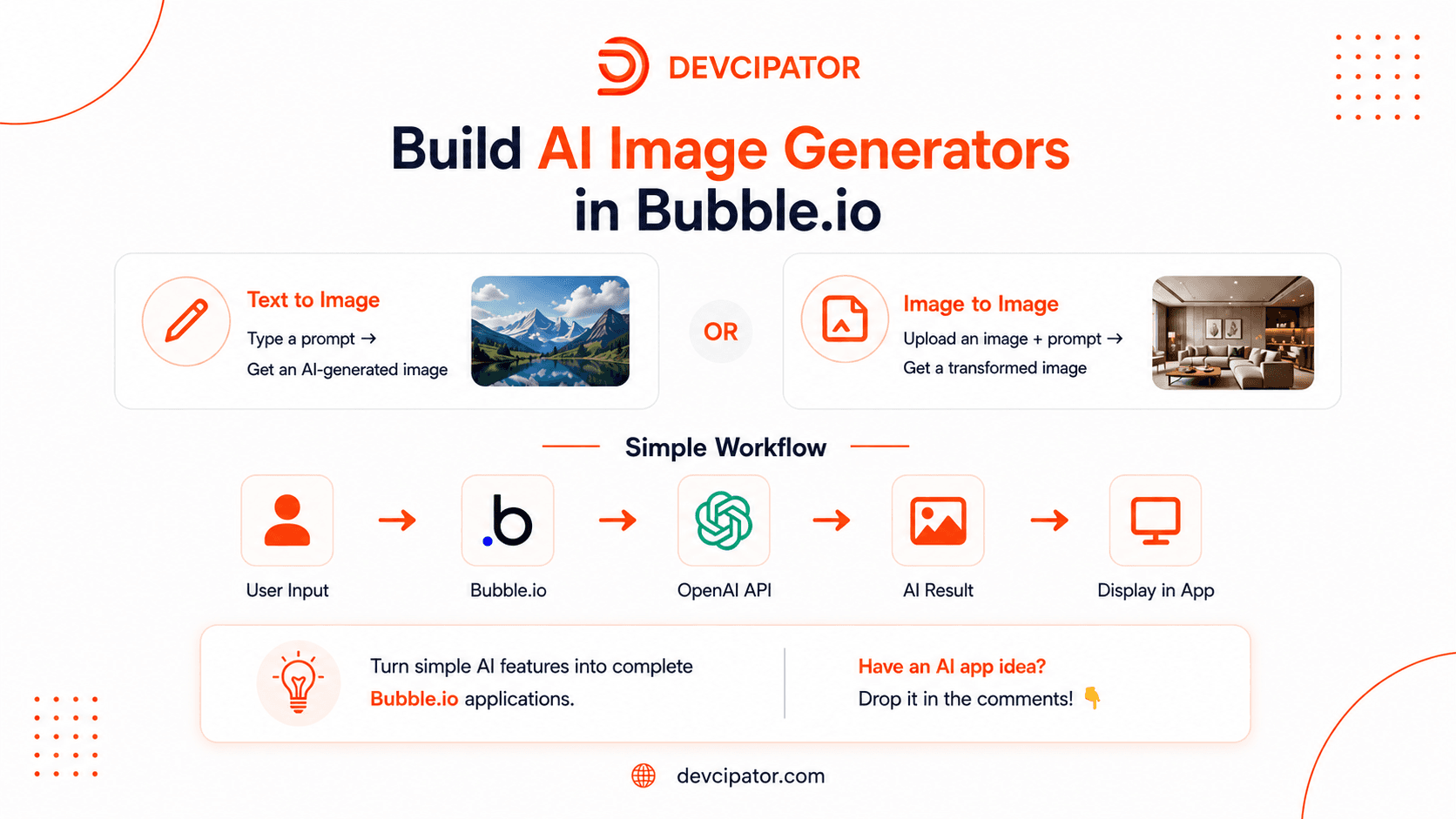
Learn how to integrate OpenAI's image generation API with Bubble.io to build powerful AI image features -- no traditional coding required. This tutorial covers both text-to-image and image-to-image workflows.
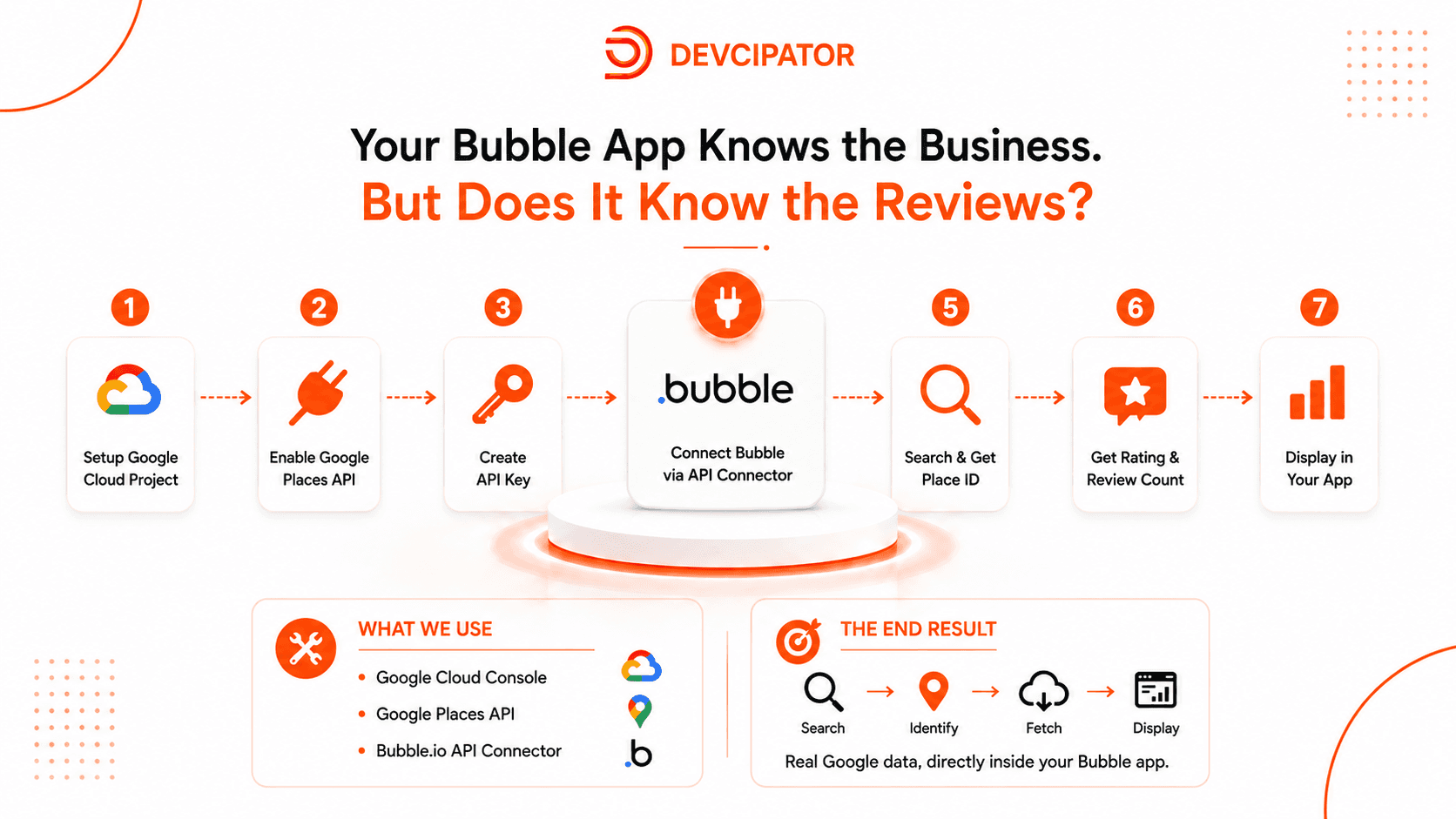
Learn how to connect the Google Places API to Bubble.io and display real Google business ratings and review counts inside your app - step by step.
