
How Technology Is Transforming Businesses in 2026
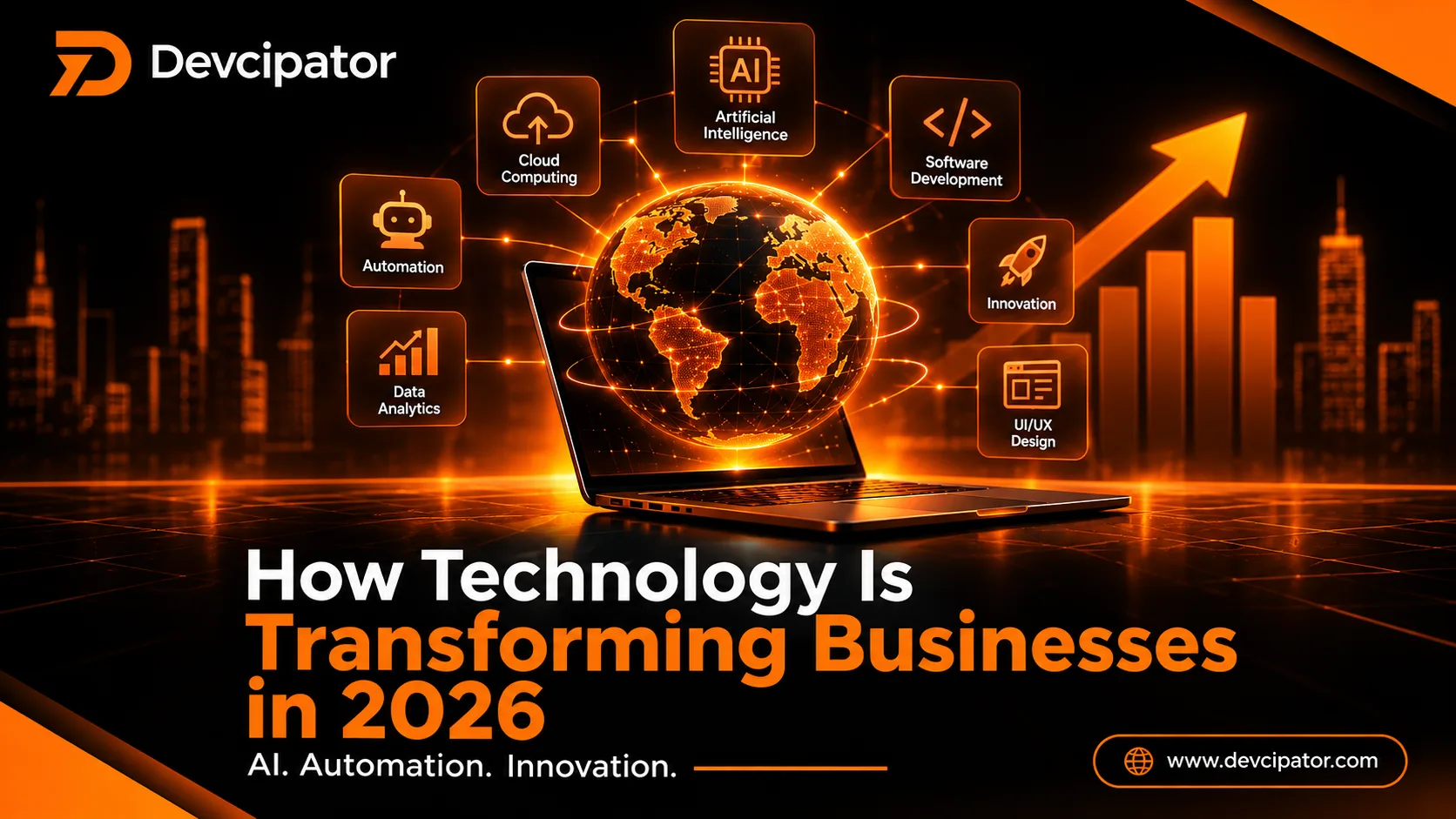
How Technology Is Transforming Businesses in 2026: AI, Automation, and Digital Innovation
Technology is changing the way businesses operate, communicate with customers, and deliver products and services. From artificial intelligence and automation to cloud computing and modern software applications, digital innovation is creating new opportunities for companies of all sizes.
In 2026, businesses are increasingly investing in technology to improve operational efficiency, enhance customer experiences, and build more competitive digital products.
However, adopting technology is not simply about using the latest tools. Successful digital transformation requires a clear strategy, the right software solutions, and a strong understanding of business objectives.
In this article, we explore how technology is transforming businesses in 2026, the most important technology trends, and how companies can use digital solutions to support sustainable growth.
What Is Business Technology?
Business technology refers to the software, digital tools, systems, and infrastructure organizations use to manage operations, develop products, communicate with customers, and improve performance.
Modern business technology includes:
Artificial intelligence and machine learning
SaaS applications
Cloud computing
Business automation
Custom software development
Web and mobile applications
Data analytics
Digital product development
These technologies help businesses simplify processes, improve accessibility, and develop new ways to serve customers.
1. Artificial Intelligence Is Changing Business Operations
Artificial intelligence is becoming an important part of modern business technology.
Companies can integrate AI into applications and workflows to support tasks such as customer support, document processing, data analysis, content generation, and intelligent search.
AI-powered applications can help businesses:
Automate repetitive tasks
Improve customer support experiences
Analyze business information
Generate useful insights
Support employee productivity
Develop personalized digital experiences
For example, an AI-powered customer support application can help users find answers to common questions while allowing support teams to focus on more complex requests.
Businesses should implement AI based on real operational needs rather than adopting it simply because it is trending.
2. Business Automation Improves Efficiency
Automation allows businesses to reduce manual work by connecting systems and creating workflows that perform repetitive tasks.
Examples include:
Automated customer onboarding
Invoice and payment notifications
CRM workflow automation
Email and communication automation
Data synchronization
Appointment scheduling
Internal business process automation
With the right automation strategy, businesses can reduce repetitive administrative work and improve consistency across operations.
Automation is especially valuable when businesses identify processes that consume significant time or frequently require manual intervention.
3. SaaS Applications Are Supporting Digital Business Growth
Software as a Service (SaaS) has become an important model for delivering software applications.
SaaS products allow users to access software through the internet without managing the entire application infrastructure themselves.
Businesses can use SaaS applications for:
Customer relationship management
Project management
Accounting and finance
Marketing automation
Team collaboration
Business analytics
Industry-specific software
Entrepreneurs can also build their own SaaS products to address specific market problems and create recurring revenue opportunities.
Successful SaaS development requires thoughtful product planning, user-friendly design, reliable architecture, security, and continuous improvement.
4. Custom Software Helps Businesses Solve Specific Problems
Every business has different processes, operational requirements, and customer needs.
Sometimes existing software cannot provide the functionality an organization requires.
Custom software development allows businesses to build applications around their specific workflows and objectives.
Custom solutions can include:
Business management systems
Customer portals
Booking platforms
E-commerce applications
Inventory management systems
Enterprise dashboards
Industry-specific digital platforms
By developing software around actual business requirements, organizations can improve workflow integration and create more suitable digital experiences.
5. UI/UX Design Is Essential for Digital Products
Technology alone does not guarantee a successful digital product.
Users need applications that are easy to understand, accessible, and convenient to navigate.
UI/UX design focuses on creating digital experiences that meet user expectations while supporting business objectives.
Effective UI/UX design includes:
User research
Information architecture
Wireframing
Interactive prototyping
Visual interface design
Usability testing
Responsive layouts
A thoughtful design process helps businesses identify usability problems before development and create applications that users can navigate confidently.
6. Cloud Computing Supports Modern Applications
Cloud computing provides businesses with access to computing resources, storage, databases, and infrastructure through cloud service providers.
Cloud-based systems can support:
Remote collaboration
Application hosting
Data storage
Software deployment
Infrastructure management
Business continuity
Cloud infrastructure can help organizations adapt their resources as requirements change.
However, businesses should also consider security, availability, data protection, costs, and infrastructure management when choosing cloud services.
7. No-Code and Low-Code Development Are Expanding Opportunities
No-code and low-code platforms allow teams to develop applications using visual development tools, reusable components, and configurable workflows.
These approaches can help businesses:
Build MVPs
Develop internal applications
Validate business ideas
Automate workflows
Create customer-facing applications
Test product concepts
Bubble.io is one example of a visual development platform used to build web applications.
No-code and low-code development can reduce certain development tasks, but complex products may still require custom code, integrations, or specialized engineering.
The best development approach depends on product requirements, scalability expectations, integrations, and long-term goals.
8. Digital Transformation Requires a Clear Strategy
Digital transformation is more than replacing manual processes with software.
It involves improving how an organization operates and delivers value through technology.
A practical digital transformation strategy should include:
Identify business challenges and opportunities.
Understand customer and employee needs.
Define measurable business objectives.
Evaluate suitable technologies.
Prioritize essential features.
Develop and test digital solutions.
Train employees and introduce new workflows.
Monitor results and continuously improve.
Businesses should focus on solving meaningful problems rather than implementing technology without a clear purpose.
How Devcipator Helps Businesses Build Digital Products
At Devcipator, we help businesses and entrepreneurs transform ideas into functional digital products.
Our services include:
SaaS product development
MVP development
Bubble.io development
AI application development
AI agents and automation
Custom software development
Web and mobile app development
UI/UX and product design
We work with clients to understand their requirements, plan product functionality, design user experiences, develop applications, and support testing and deployment.
Whether you are launching a startup, building a SaaS platform, automating business operations, or developing a custom application, the right technology approach can help you move forward with confidence.
Conclusion
Technology is creating new opportunities for businesses to improve operations, develop innovative products, and deliver better customer experiences.
Artificial intelligence, automation, SaaS, cloud computing, and custom software are becoming important components of modern digital strategies.
However, successful technology adoption starts with understanding business needs and selecting solutions that provide meaningful value.
Businesses that approach digital innovation strategically can build stronger operational foundations and prepare for future opportunities.
Ready to transform your business idea into a digital product?
Devcipator helps startups and businesses build modern software applications, SaaS platforms, AI-powered solutions, and digital products.
Visit https://devcipator.com/ to explore our services and discuss your project.
Frequently Asked Questions
What is the most important technology trend for businesses in 2026?
AI, automation, cloud computing, SaaS, and digital product development are important technology areas. Their relevance depends on business objectives and industry requirements.
How can technology help small businesses?
Technology can help small businesses automate workflows, manage customers, improve communication, analyze information, and develop digital services.
What is digital transformation?
Digital transformation is the process of improving business operations, customer experiences, and organizational capabilities through digital technologies.
Is custom software better than ready-made software?
Not always. Ready-made software can be suitable for common business requirements, while custom software may be appropriate when existing solutions cannot meet specific needs.
How can businesses start using AI?
Businesses can begin by identifying repetitive tasks or problems where AI could provide value, then evaluate suitable tools, APIs, or application integrations.
Why is software development important for digital transformation?
Software development helps organizations create applications, integrate systems, automate processes, and deliver digital services that support their business goals.
Related articles
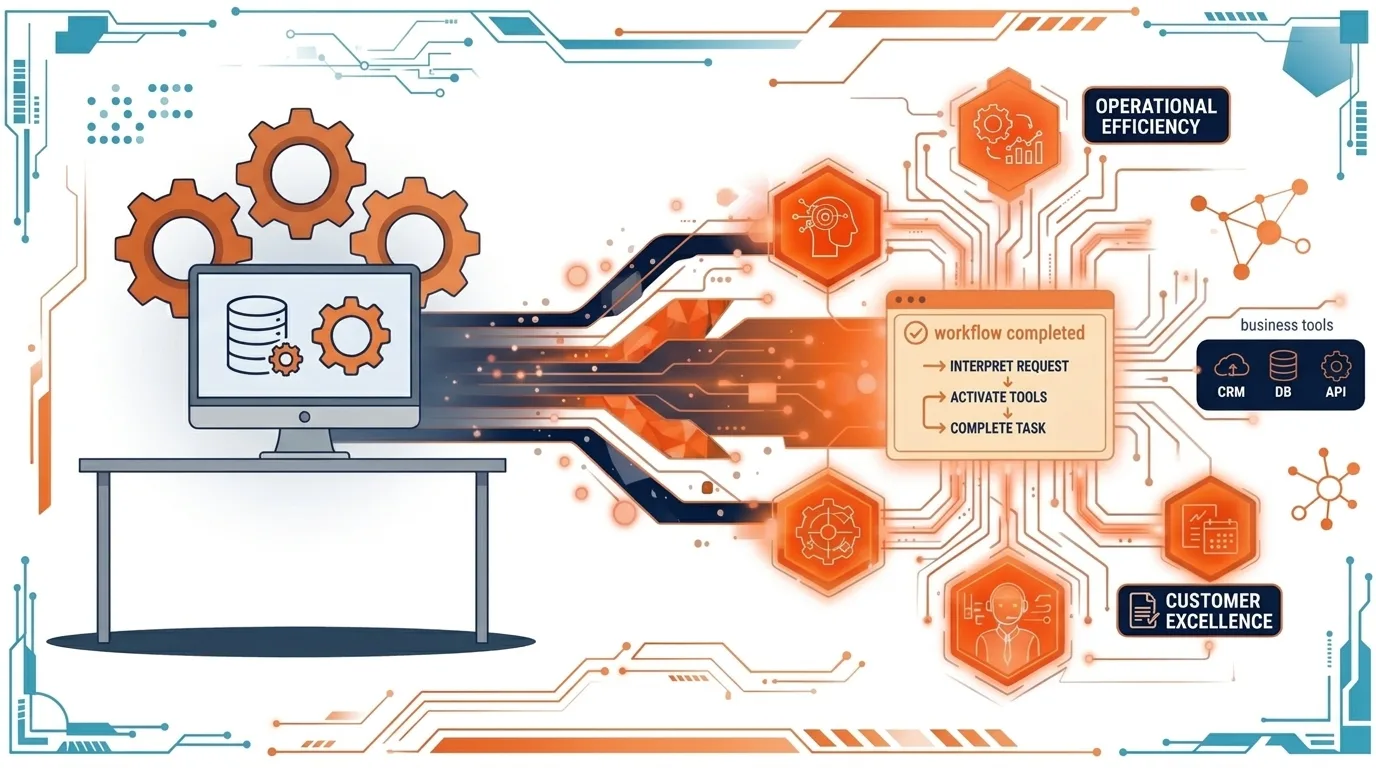
AI Agents for Business Automation: Benefits, Use Cases, and How They Work
Discover how AI agents move beyond simple chatbots to transform repetitive business tasks into automated, intelligent workflows that lower costs and improve operational efficiency.

Vibe Coding Is Fast. But Enterprise ERP Needs More Than Speed.
AI can generate code in minutes, but compliance-heavy businesses need more than speed. Here’s why accountability, risk management, and trust matter most when building enterprise ERP systems.
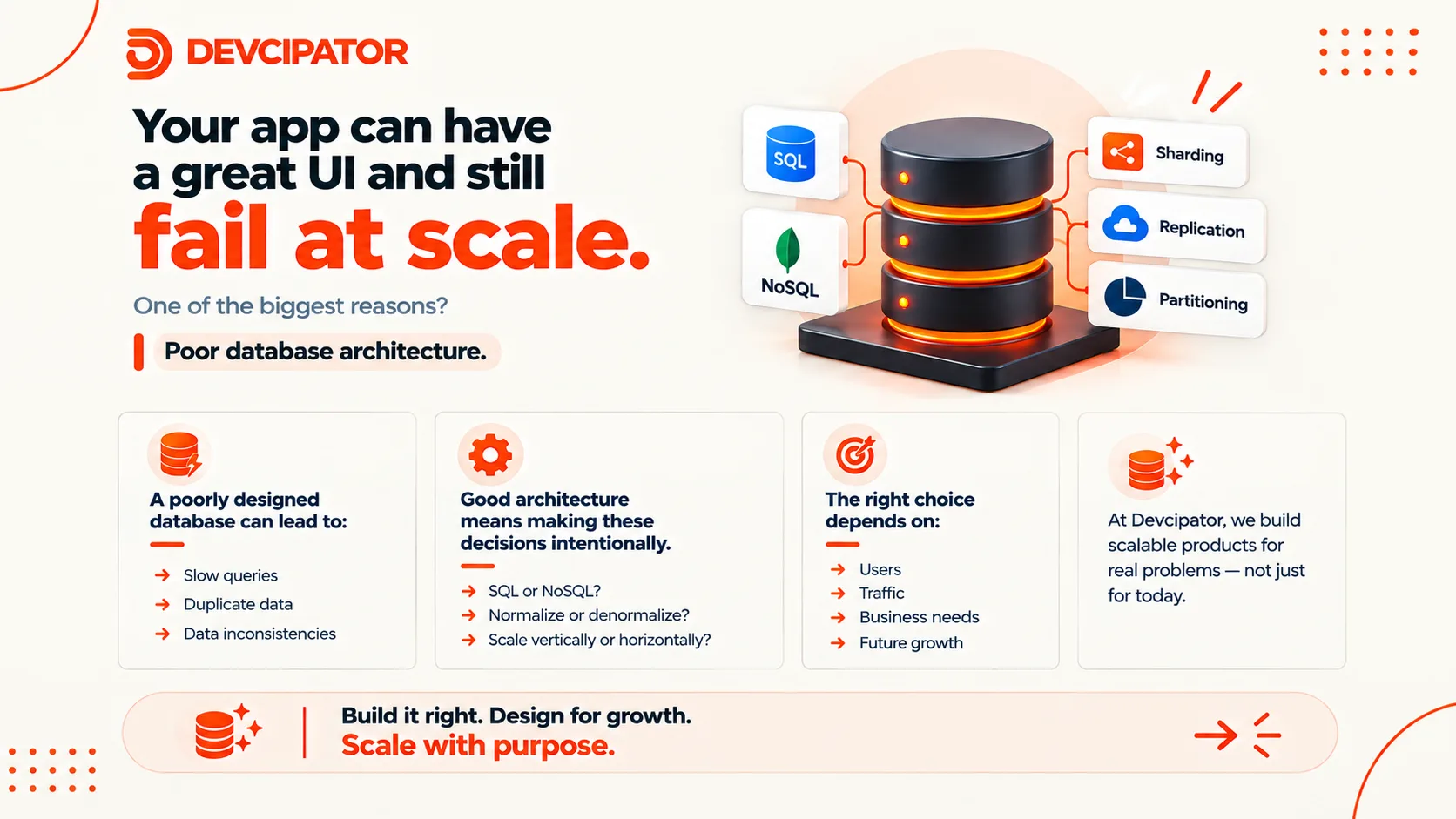
Your App Can Have a Great UI and Still Fail at Scale
A polished interface won't save a product built on a weak foundation. Learn why database architecture is one of the biggest factors in whether your app scales, and how to make the right design decisions before they become expensive rewrites.