
Low-Code vs. Traditional Development: Which Is Better for Your Startup in 2026?
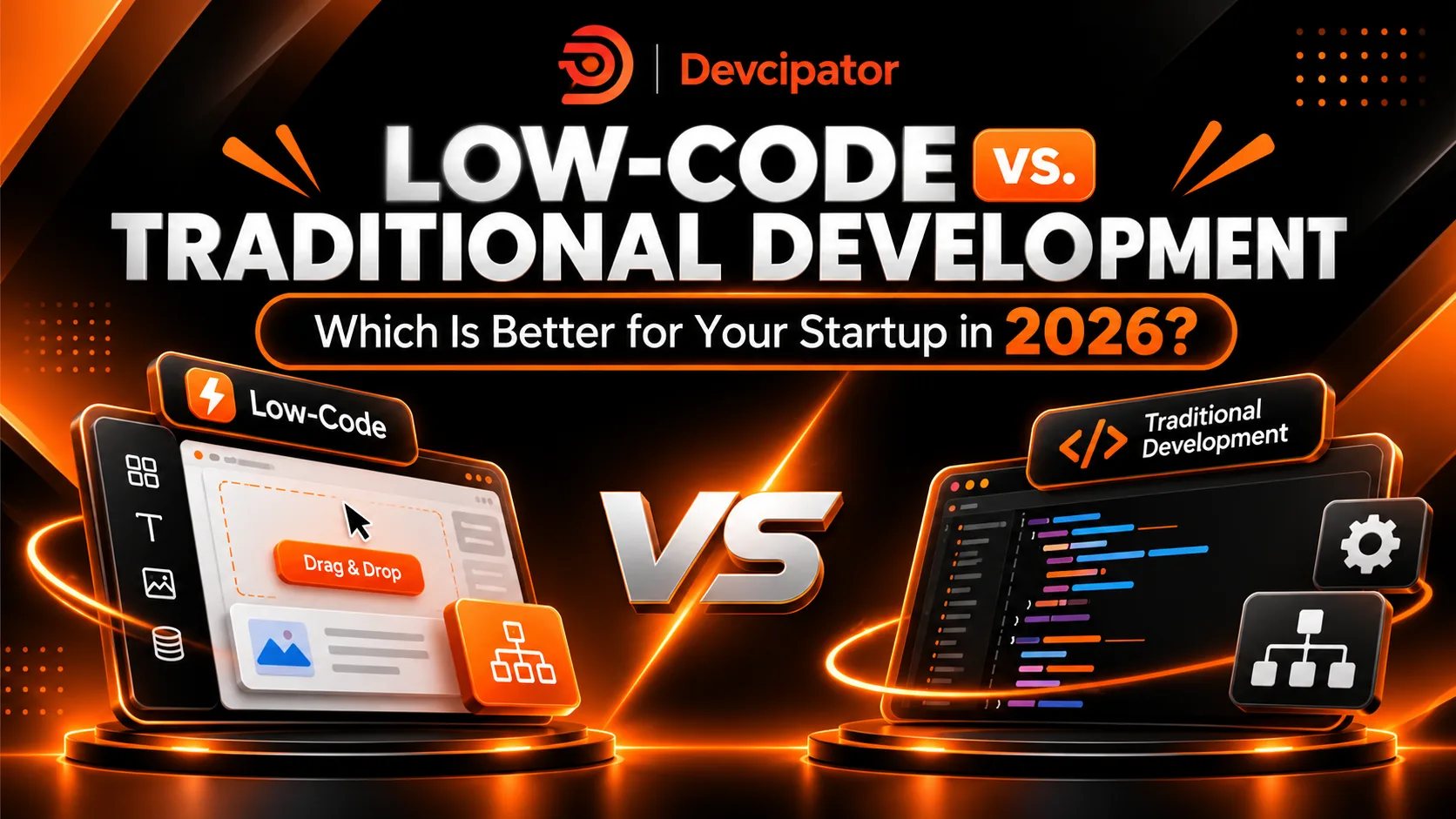
Low-Code vs. Traditional Development: Which Is Better for Your Startup in 2026?
Choosing the right development approach can make a significant difference to your startup's budget, launch timeline, and long-term growth. Here's what founders need to know before building their next digital product.
Introduction
Every successful digital product starts with an idea. But turning that idea into a working application requires an important decision: should you choose low-code development or traditional software development?
For startups and growing businesses, this decision can influence how quickly you launch, how much you invest, and how easily your product evolves.
Traditional development offers extensive flexibility and control, while low-code development uses visual tools, reusable components, and integrations to simplify the building process.
In 2026, businesses have more development options than ever. Platforms like Bubble.io and FlutterFlow allow teams to create powerful applications without writing every line of code manually.
At Devcipator, we help startups and businesses turn ideas into scalable digital products through MVP development, Bubble.io development, SaaS solutions, and custom software engineering.
Let's explore both approaches and understand which one makes sense for your business.
What Is Low-Code Development?
Low-code development is an approach to building software using visual development environments, prebuilt components, reusable elements, and automated workflows.
Instead of manually coding every feature, developers can use visual tools to create application interfaces, configure business logic, connect databases, and integrate external services.
However, low-code doesn't mean eliminating developers.
Professional developers can still use custom code, APIs, and advanced integrations whenever a project requires additional flexibility.
For example:
Imagine you're launching a service marketplace where customers can book professionals.
Your application might require:
User registration and authentication
Customer and service provider dashboards
Booking and scheduling systems
Payment integrations
Notifications and automated workflows
Database management
A low-code platform like Bubble.io can simplify the development of many of these features, helping your team focus on building the actual business solution.
What Is Traditional Software Development?
Traditional software development involves building applications primarily through programming languages, frameworks, and custom engineering.
Developers write code to create the application's frontend, backend, database architecture, APIs, and other technical components.
Common technologies include:
React and Next.js
Node.js
Python
PostgreSQL
Firebase and Supabase
Flutter
This approach gives development teams greater control over application architecture, infrastructure, performance optimization, and specialized functionality.
Traditional development is particularly useful when an application has complex technical requirements or needs extensive customization.
Low-Code vs. Traditional Development: Key Differences
Both approaches can produce powerful digital products, but they differ in how applications are designed, developed, maintained, and scaled.
FactorLow-Code DevelopmentTraditional DevelopmentDevelopment SpeedGenerally fasterDepends on complexityCoding RequirementsMinimal to moderateExtensiveCustomizationPlatform-dependentExtensive flexibilityInitial InvestmentOften lowerCan be higherMaintenancePlatform-dependentDeveloper-managedIntegrationsBuilt-in connectors and APIsCustom API developmentTechnical ControlDepends on platformGreater architectural controlBest ForMVPs, SaaS, business appsSpecialized and complex systems
The right choice depends on your application's requirements, available resources, and long-term business objectives.
5 Reasons Startups Choose Low-Code Development
For many startups, launching quickly and validating an idea is more important than building every possible feature from day one.
Here are five reasons low-code development can be a practical choice.
1. Faster Product Launch
Traditional development can involve building interfaces, backend systems, databases, and integrations separately.
Low-code platforms simplify many of these processes through reusable components and visual development tools.
This allows development teams to focus on essential functionality and bring products to market more efficiently.
2. More Efficient Development Budget
Startups often operate with limited budgets.
Low-code development can reduce repetitive development work and make better use of available resources.
Instead of spending time rebuilding common features, teams can use existing components and integrations.
However, platform subscriptions, application complexity, integrations, and ongoing maintenance should still be considered when estimating the total cost.
3. Easier MVP Development
A Minimum Viable Product (MVP) helps startups test their ideas with real customers before investing in a complete product.
With low-code development, businesses can build essential features, launch an initial version, collect feedback, and improve the application based on actual user needs.
This reduces the risk of spending resources on features customers may never use.
4. Simplified Business Automation
Modern applications often require automated workflows.
For example, a booking platform might automatically:
Notify service providers about new bookings.
Send confirmation emails to customers.
Update booking statuses.
Process payment notifications.
Trigger reminders before appointments.
Low-code platforms make it easier to configure these workflows using visual logic and integrations.
5. Flexible Product Improvements
Customer expectations and business requirements change over time.
Low-code development can make certain improvements easier, including updating dashboards, modifying workflows, adding features, and connecting new services.
With proper planning and testing, businesses can continuously improve their products as they grow.
When Should You Choose Traditional Development?
Low-code isn't the perfect solution for every application.
Traditional development may be more suitable when your product requires:
Highly Specialized Functionality: Applications with unusual technical requirements may need custom engineering.
Advanced Performance Optimization: Products with demanding processing requirements may benefit from greater control over infrastructure and application architecture.
Specialized Security Requirements: Businesses operating in regulated environments may need specific infrastructure, security controls, and compliance capabilities.
Greater Platform Independence: Some businesses require complete control over their technology stack, deployment environment, and data infrastructure.
In these situations, custom development or a hybrid approach may be a better investment.
Is Bubble.io a Good Choice for Startup Development?
Bubble.io is one of the visual development platforms that helps businesses build interactive web applications without manually coding every component.
It provides tools for designing interfaces, managing databases, creating workflows, and connecting external services.
Businesses can use Bubble.io to develop:
SaaS applications
Online marketplaces
Booking platforms
Customer portals
Internal business tools
Startup MVPs
AI-powered web applications
One of its biggest advantages is the ability to bring application functionality together within a visual development environment.
However, successful Bubble development still requires proper database architecture, security rules, workflow optimization, and performance planning.
The platform alone doesn't guarantee a scalable application. The quality of its implementation matters.
Why a Hybrid Development Approach Can Be the Best Option
Sometimes, businesses don't need to choose between low-code and traditional development.
A hybrid approach combines visual development platforms with custom programming and external technologies.
For example, a startup could use:
Bubble.io for the main application interface and workflows.
External APIs for specialized functionality.
Supabase or PostgreSQL for specific data requirements.
OpenAI for AI-powered features.
Custom backend services for complex processing.
This approach allows businesses to benefit from faster visual development while maintaining flexibility for features that require custom engineering.
The important thing is selecting technologies based on actual product requirements rather than following trends.
How Devcipator Helps Startups Build Better Digital Products
Choosing the right technology is only one part of building a successful application.
You also need a clear product strategy, professional UI/UX design, reliable development, proper testing, and a plan for future improvements.
At Devcipator, we help entrepreneurs, startups, and established businesses transform their ideas into functional digital products.
Our services include:
MVP Development: Turn your business idea into a working product that can be tested with real users.
Bubble.io Development: Build interactive web applications, marketplaces, SaaS platforms, and custom workflows using visual development.
SaaS Product Development: Create subscription-based platforms with user management, dashboards, and payment integrations.
AI Application Development: Integrate AI capabilities into applications to improve functionality and automate business processes.
Custom Software Development: Build specialized applications and business systems around your operational requirements.
UI/UX Design: Create intuitive and user-friendly experiences that make your product easier to use.
Our development process covers consultation, product planning, UI/UX design, development, testing, deployment, and handover.
We focus on building products that solve real business problems and have room to grow.
Conclusion
Low-code and traditional development are both valuable approaches to modern software development.
Low-code can help startups launch faster, validate ideas, and build functional applications with less repetitive development work.
Traditional development provides greater architectural control and flexibility for specialized technical requirements.
The best choice isn't necessarily the technology that offers the fastest development. It's the approach that supports your business goals today while allowing your product to evolve tomorrow.
Whether you're planning a SaaS platform, marketplace, AI application, or startup MVP, choosing the right development strategy is an important first step.
Ready to turn your idea into a digital product?
Let's discuss your project and find the right development approach for your business.
Visit https://www.devcipator.com/ and book a free consultation with our team.
Frequently Asked Questions
1. Is low-code development better than traditional development?
Neither is universally better. Low-code is useful for faster application development and MVPs, while traditional development offers greater control for specialized applications.
2. Does low-code development reduce development costs?
It can reduce repetitive development work and improve development efficiency. However, the overall cost depends on platform fees, complexity, integrations, maintenance, and scaling requirements.
3. Can I switch from low-code to traditional development later?
Yes, migration is possible, but it requires planning. Data structures, business logic, integrations, and platform dependencies should be considered before starting development.
Related articles
Low-Code Development in 2026: Build Apps Faster and Smarter
Discover how low-code development helps startups and businesses build applications faster, reduce development complexity, automate workflows, and launch scalable digital products. Learn about popular low-code platforms, key benefits, and how Devcipator can help turn your idea into reality.
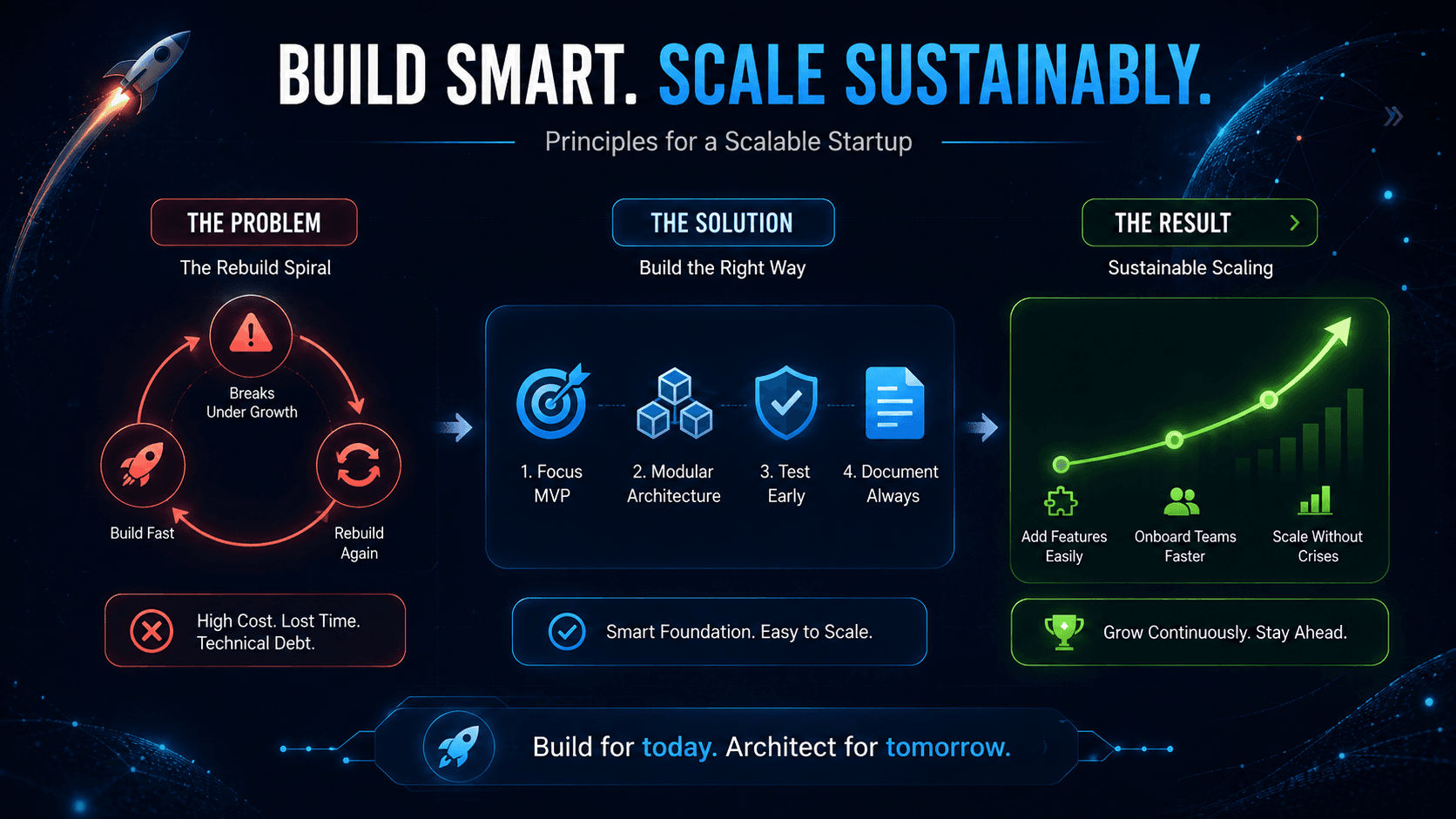
How to Build a Startup That Doesn't Need to Be Rebuilt Later
MVP, no-code, and scalability aren't three separate decisions - they're one strategy. Here's how to validate fast, build on the right foundation, and grow without a costly rebuild down the road.
Part 6 | Bubble.io Login, Signup and Forgot Password Flow | Full Guide in Hindi/Urdu
User authentication is the foundation of every production app. In Part 6 of our Bubble.io Training Series explained 100% in Hindi/Urdu, we show you how to build a complete Login, Signup, and Forgot Password flow inside Bubble.io without writing any code. We cover form design, authentication workflows, password recovery, and security best practices. Perfect for beginners and no-code developers adding auth to their Bubble app. Watch Part 6 here: https://youtu.be/i6FagBzUdK4