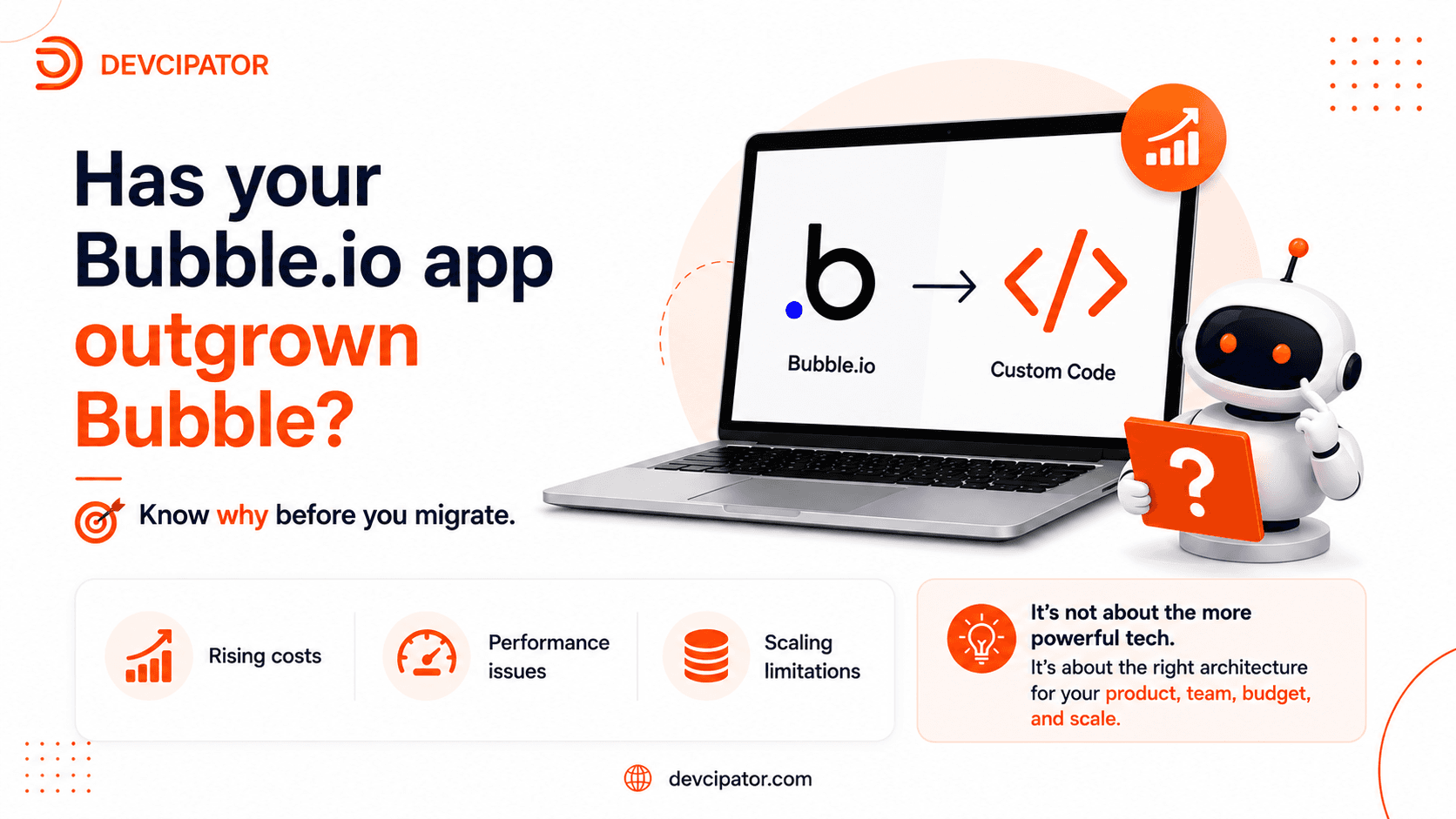
Bubble.io has made it possible for startups, entrepreneurs, and businesses to build powerful applications without traditional programming. It can significantly reduce development time while making it easier to launch, test, and improve a product.
But as an application grows, an important question eventually comes up:
However, moving from Bubble.io to custom code is a major decision. And changing the technology alone does not guarantee that your problems will disappear.
Bubble.io can support surprisingly complex applications, but every platform has limitations.
As an application becomes larger, teams may encounter challenges such as:
Increasing infrastructure costs
Performance issues
Complex workflows
Database optimization problems
Heavy backend processing
Difficulties implementing highly customized features
Scaling challenges
Greater dependency on the platform
These challenges can make a custom development stack attractive.
With traditional development, you have significantly more control over your application's architecture, database, backend, APIs, infrastructure, and performance.
But that additional control comes with additional responsibility.
One of the biggest mistakes teams can make is assuming that moving to custom code will automatically solve their application's problems.
Consider an application with inefficient database queries, unnecessary workflows, poor data structures, excessive backend operations, and an architecture that was never designed for scale.
Moving that application to React, Node.js, Python, or another technology does not automatically fix those architectural problems.
The technology has changed, but the underlying engineering problems may remain.
This is why the real question should not simply be:
"Should we use Bubble.io or code?"
Instead, ask:
"Is our application architecture designed correctly for the scale and complexity we need?"
One of Bubble.io's biggest advantages is that it handles many technical responsibilities for you.
You do not have to build every infrastructure component from scratch. Authentication, database functionality, deployment, workflows, and other systems can be handled within the platform.
But this convenience does not mean performance can be ignored.
Applications can still become inefficient because of poorly designed searches, unnecessary workflows, excessive database operations, or backend processes that could have been optimized.
Before deciding to rebuild an application, it is important to understand what is actually causing the problem.
Is Bubble.io reaching a genuine limitation?
Or does the application need better architecture and optimization?
That distinction can save months of development work and significant amounts of money.
One of the strongest arguments for custom development is control.
You can choose your database, backend architecture, hosting infrastructure, APIs, caching strategy, monitoring tools, and deployment process.
But once you leave Bubble.io, many responsibilities that were previously handled by the platform become your team's responsibility.
A traditional application may require you to manage:
Backend infrastructure
Database optimization
Authentication and authorization
Security
Deployment
Server monitoring
Error handling
Backups
Scaling
Caching
Logging
API infrastructure
Third-party integrations
Ongoing maintenance
None of these responsibilities disappear when you migrate.
They simply move from the platform to your development team.
If you decide to move toward custom development, having strong technical leadership becomes extremely important.
Someone needs to understand software architecture and make decisions about:
Database design
Backend architecture
Application scalability
API structure
Caching
Security
Infrastructure
Monitoring
Performance
Future growth
Without proper technical direction, a migration can replace one set of problems with another.
The technology stack is only one part of building a successful application.
Good engineering decisions matter more than the technology label.
A complete migration can require significant time, money, and development resources.
Before rebuilding an application, investigate the actual source of the problem.
If costs are increasing, analyze what is generating the workload.
If performance is poor, identify the slow operations and determine whether they are caused by database structure, workflows, external APIs, infrastructure, or platform limitations.
If a particular feature is difficult to implement, determine whether it is genuinely impossible or simply requires a different technical approach.
Sometimes optimization is enough.
Sometimes the existing architecture needs to be redesigned.
And sometimes the application really has outgrown the platform.
All three situations are possible.
There are legitimate situations where custom development is the better long-term choice.
For example, a company may require:
Highly customized infrastructure
Complete backend control
Specialized computational workloads
Advanced real-time functionality
Specific database technologies
Very high traffic capacity
Complex integrations
Greater control over deployment
Features that are difficult to implement within Bubble.io
In these situations, custom development can provide the flexibility required for the next stage of the product.
The important part is making the decision based on technical requirements rather than frustration.
Moving away from Bubble.io is not always the right answer.
If an application's problems can be solved through better database design, workflow optimization, architecture improvements, and workload reduction, rebuilding everything may create unnecessary costs.
For startups and businesses that prioritize rapid development, flexibility, and reduced infrastructure management, Bubble.io can still be a practical choice.
The platform itself is not automatically the problem.
Implementation matters.
The debate between no-code and traditional development is often presented as if one technology has to win.
The reality is more complicated.
Bubble.io can be an excellent choice for certain applications.
Custom development can be an excellent choice for others.
But neither option protects a team from poor engineering decisions.
Before rebuilding an application, understand what is actually causing the problem.
Measure the workload.
Analyze the architecture.
Optimize what can be optimized.
Understand the platform's limitations.
Then decide whether the existing technology can support the next stage of the product.
The goal should not be to choose the technology that sounds more powerful.
The goal is to choose the architecture that makes sense for the product, the team, the budget, and the scale you actually need.
Sometimes that means staying with Bubble.io.
Sometimes it means moving to custom code.
The important part is knowing why.
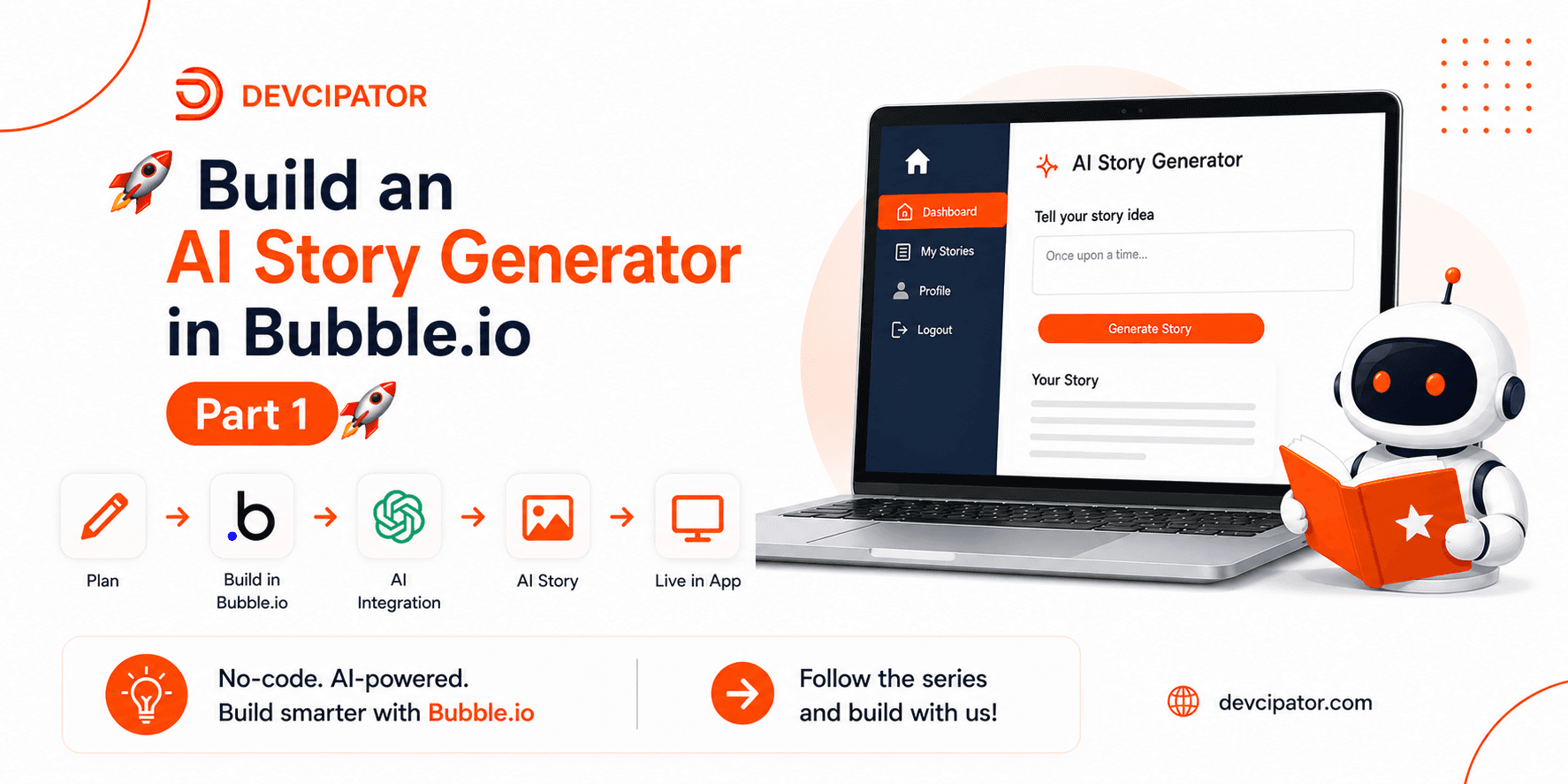
Part 1 of our Story Generation App training series -- a full walkthrough of the Figma app flow, application structure, and complete user authentication system built in Bubble.io.
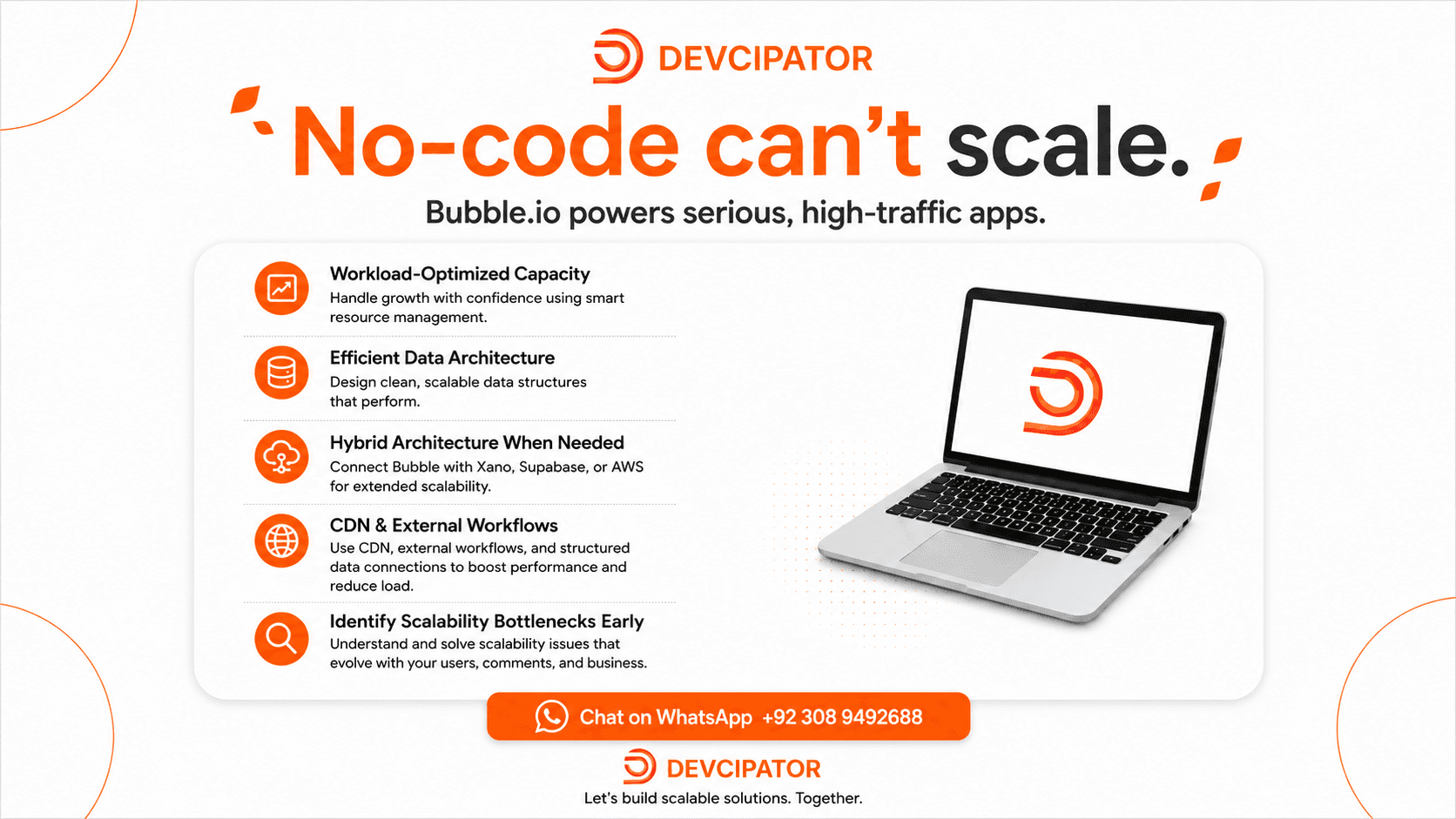
There's a common assumption that no-code platforms fall apart under real traffic and growth. The truth is scalability depends on architecture, not the platform — and Bubble.io can power serious, high-traffic applications when built right.
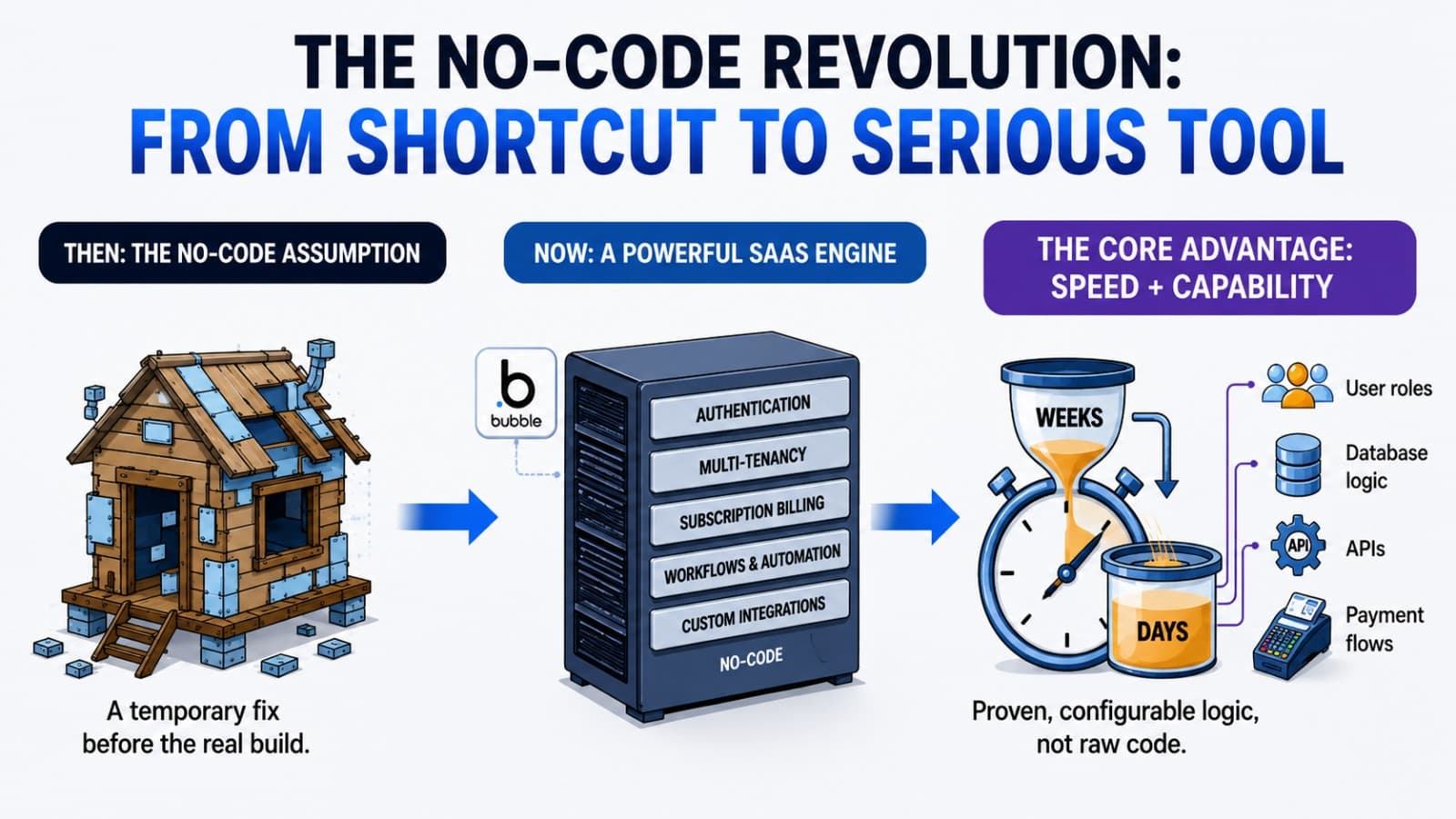
No-code used to mean "good enough for a prototype." Today, platforms like Bubble.io power production-grade SaaS products used by real paying customers. Here's what changed — and why it matters for founders.
