Why No-Code Development Is Changing SaaS Product Development
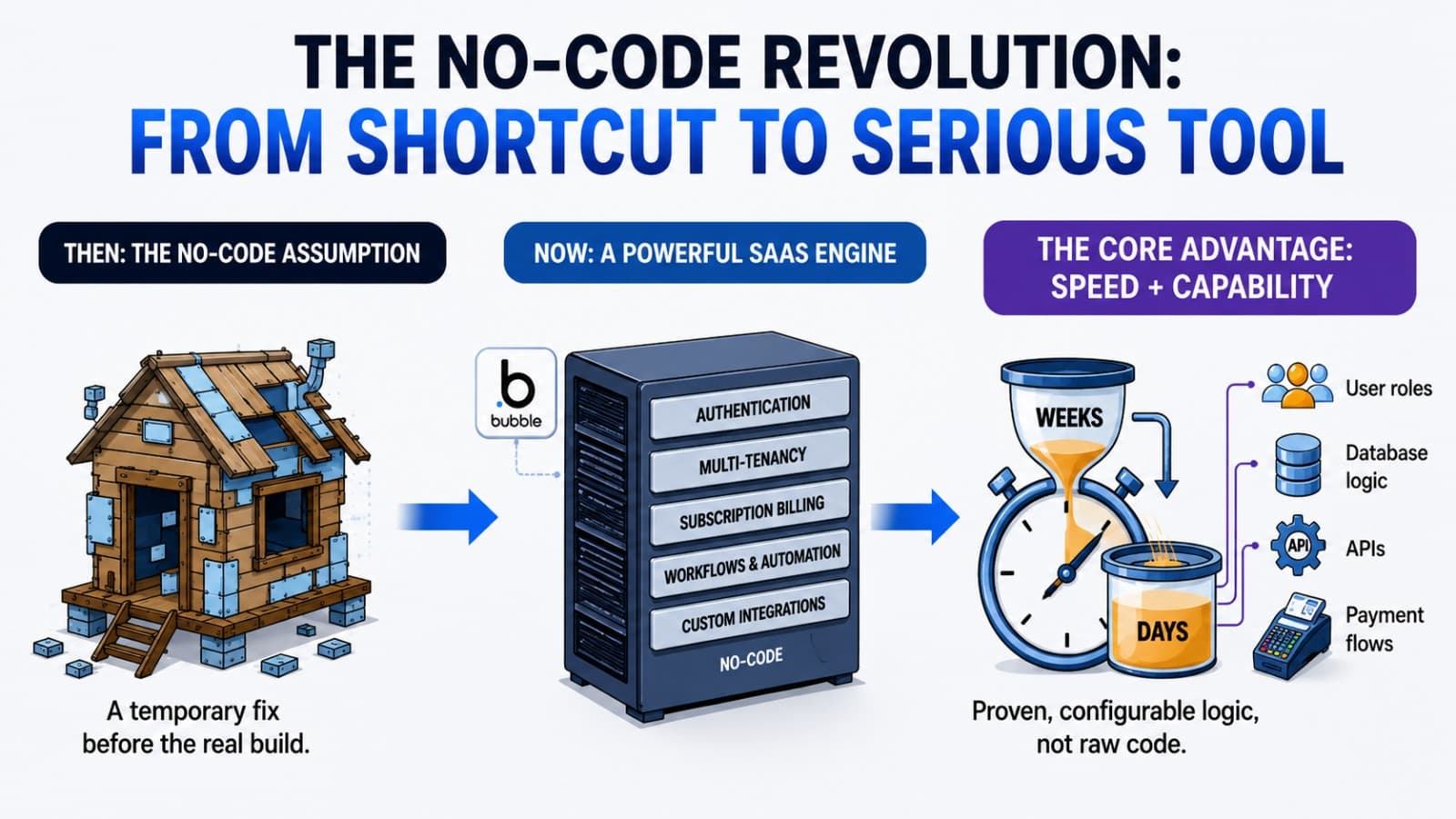
A few years ago, "no-code" was a term founders used carefully, usually followed by, "but we'll rebuild it properly once we have traction." That assumption no longer holds up.
Modern no-code platforms, especially Bubble.io, can now power fully functional SaaS products with user authentication, multi-tenant architecture, subscription billing, API integrations, and complex custom workflows. These are the same core building blocks used in traditional custom software development, but they can be assembled visually instead of being written line by line in code.
The biggest advantage of no-code development is speed without sacrificing capability.
A workflow that might take a traditional development team weeks to build, such as user roles, database logic, API integrations, and payment processing, can often be developed and tested in days with a no-code platform.
Instead of writing and debugging every component from scratch, developers can configure proven infrastructure and focus their time on the product's functionality and user experience.
This can significantly reduce development time and help businesses launch products faster.
The benefits of no-code development are particularly important during the earliest and riskiest stage of a startup.
When you do not yet know whether your product will resonate with users, every week spent building is a week that could have been spent testing, collecting feedback, and learning from your target audience.
No-code platforms can dramatically shorten the gap between an idea and a working MVP.
Founders can build, test, modify, and validate their product without committing months of development resources before knowing whether the idea has market potential.
This makes no-code an increasingly attractive approach for MVP development, startup validation, and rapid product development.
No-code development is no longer limited to simple prototypes or basic landing pages.
Platforms such as Bubble.io now provide the functionality required to build sophisticated web applications and SaaS products.
Developers can work with:
API connectors and external APIs
Custom database structures
Advanced workflows and business logic
User authentication and role-based access
Subscription and payment systems
Third-party integrations
Stripe payment integrations
Google Maps integrations
OpenAI integrations
Google Gemini integrations
AI-powered application features
Multi-tenant SaaS architectures
These capabilities make it possible to create production-ready no-code applications, rather than simply building clickable prototypes.
The growth of AI has made no-code development even more powerful.
Platforms like Bubble.io can connect applications with AI services such as OpenAI and Google Gemini, allowing developers to build features such as AI content generation, image generation, document processing, data analysis, chatbots, and intelligent automation.
This combination of AI and no-code development allows businesses to experiment with advanced product ideas much faster than traditional development approaches often allow.
Another underrated advantage of no-code development becomes visible after launch.
Because applications are built visually, founders and product teams can often make smaller content, layout, and workflow changes without requiring a developer for every minor adjustment.
With a fully custom codebase, even relatively simple changes may require developers to locate the relevant files, modify the code, test the changes, and deploy a new version.
A visual development environment can make these iterations significantly more accessible and efficient.
However, no-code development is not a replacement for good product thinking or technical expertise.
A platform does not automatically decide how your user flows should work, how your database should be structured, or how your business logic should be organized.
A skilled no-code developer still needs to understand:
Database architecture
User experience and user flows
API integrations
Security and privacy
Performance optimization
Business logic
Scalability
Application architecture
The same principle applies to traditional software development. Writing code does not automatically result in a well-designed product.
The quality of the final application depends heavily on how the product is planned and architected.
The real shift is that no-code development has moved from being a shortcut for non-technical people to becoming a serious development approach used by experienced product teams.
The goal is not simply to avoid writing code. The goal is to remove unnecessary development time while retaining the ability to build sophisticated products.
For startups, SaaS companies, entrepreneurs, and businesses looking to validate ideas quickly, this can provide a major competitive advantage.
For founders trying to move from an idea to a working, testable product quickly, the question is no longer simply, "Should I use no-code?"
A better question is:
"Why would I build the first version any other way?"
With platforms like Bubble.io, businesses can develop SaaS applications, integrate APIs, connect AI services, implement subscription billing, and test real products with real users, all while significantly reducing development time.
For many startups, no-code development is no longer just an alternative to traditional software development. It is a practical way to build, validate, and improve products faster.
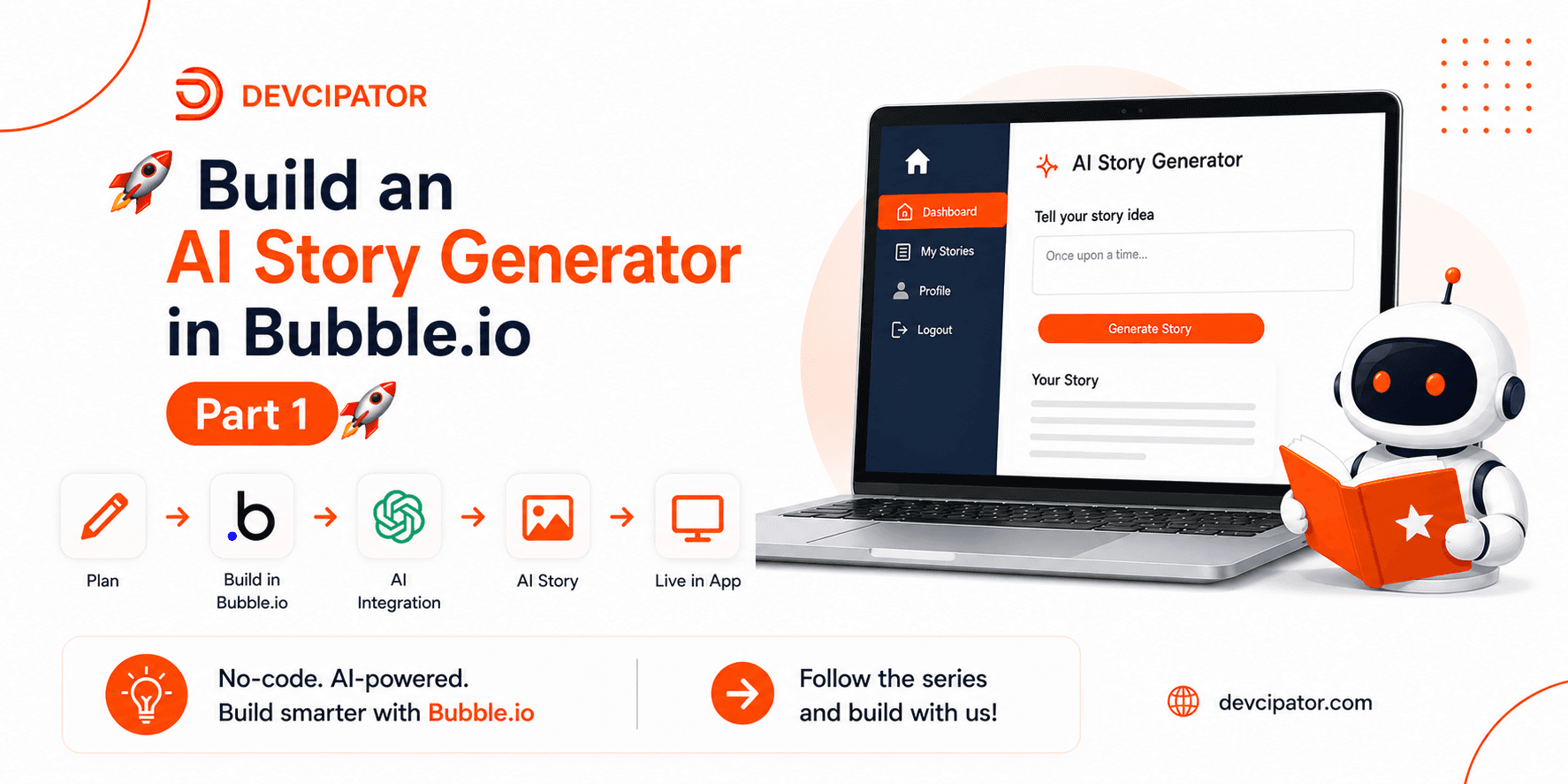
Part 1 of our Story Generation App training series -- a full walkthrough of the Figma app flow, application structure, and complete user authentication system built in Bubble.io.
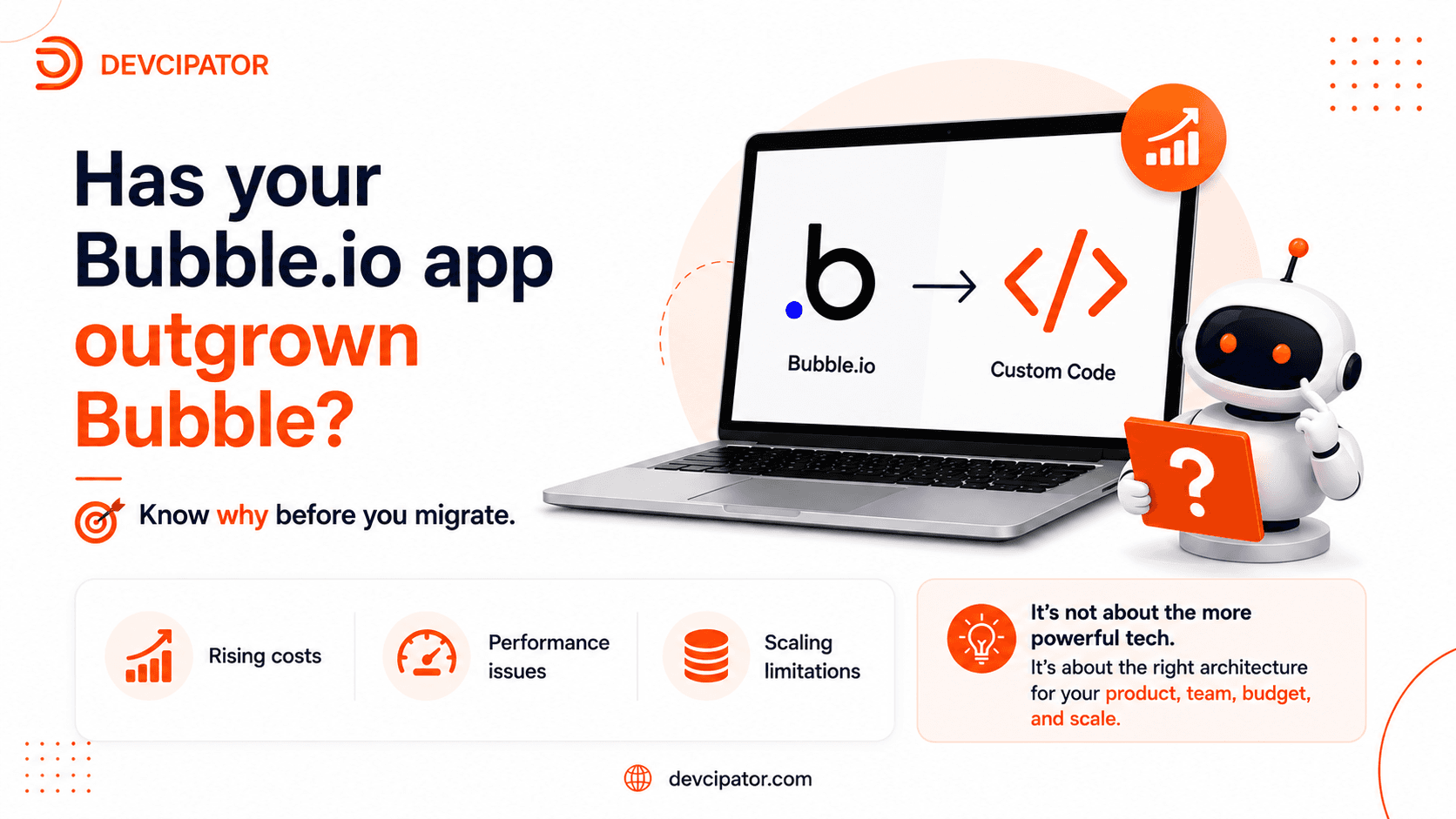
Is your Bubble.io app becoming expensive, slow, or difficult to scale? Before moving to custom code, understand the real reasons behind the problem and whether a complete technology migration is actually the right solution.
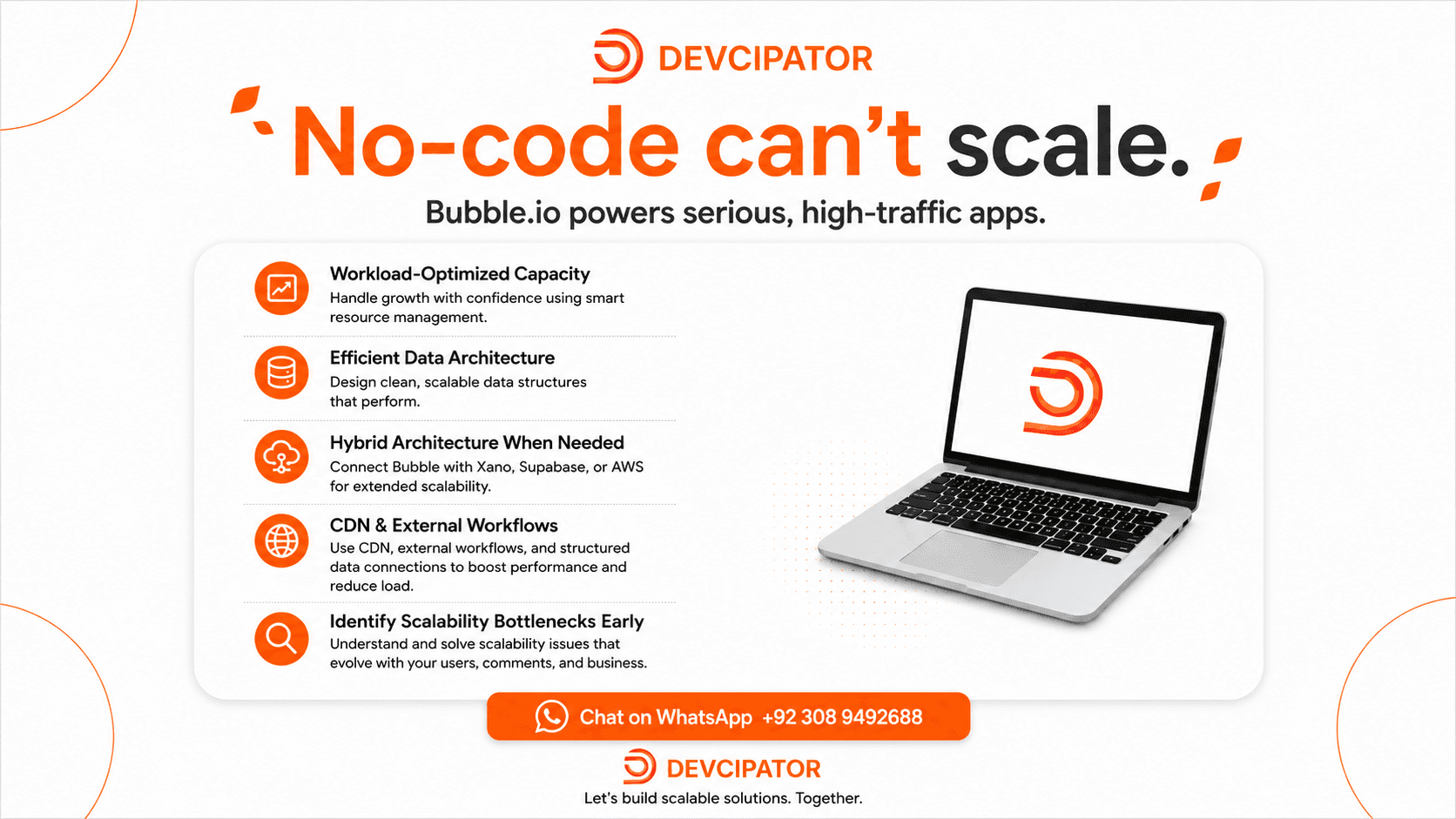
There's a common assumption that no-code platforms fall apart under real traffic and growth. The truth is scalability depends on architecture, not the platform — and Bubble.io can power serious, high-traffic applications when built right.
