
How to Choose a Bubble.io Agency: What to Check Before You Hire
To choose a Bubble.io agency, look past the portfolio screenshots and check how the team handles the parts of Bubble that decide whether an app survives real use: the data structure, privacy rules, workload, plugins and who owns the app. Then run a short paid discovery or a small first milestone before you commit to the full build. The right agency will ask you more questions about your users than you ask them about their rates.
Hiring help for a Bubble app is different from hiring a general software team. Bubble removes a lot of code, but it doesn't remove architecture. Two apps that look the same in a demo can behave very differently once there are real users, real data and real money moving through them. This guide covers what to check, which questions to ask, the red flags to watch for, and how to compare proposals.
What a Bubble.io Agency Should Actually Do for You
A good Bubble agency does more than drag elements onto a page. Before anyone opens the editor, they should help you decide what the first version needs to do and what it can leave out. In our experience building MVPs on Bubble, most of the cost and delay in a project comes from unclear scope rather than from the build itself.
Expect an agency to cover:
Discovery and scoping: turning your idea into user roles, core flows and a prioritised feature list.
UI/UX design: wireframes or Figma designs of the main screens before development, so you are reviewing layouts, not rebuilding them.
Data modelling: designing data types, fields and relationships so searches stay fast as the database grows.
Workflows and integrations: payments, email, AI models and third-party APIs through Bubble's API Connector or plugins.
Testing and launch: checking each flow in the development version before deploying to live.
Handover and support: documentation, training and a plan for fixes and new features after launch.
If an agency's proposal jumps straight from "your idea" to "development", the thinking you skipped will show up later as change requests.
Bubble-Specific Skills to Check
Plenty of teams can build a Bubble app that works in a demo. Fewer can build one that stays fast, secure and affordable to run. These are the areas where experience shows.
Data structure and performance
Ask how they would structure the data for your app and why. A team that knows Bubble well will talk about avoiding heavy nested searches on page load, storing lists sensibly, and moving expensive work into backend workflows. If you have heard that Bubble apps can't grow, read why the "no-code can't scale" claim is mostly about how apps are built.
Privacy rules and security
Bubble's privacy rules control which users can see and change which data. They are easy to forget because the app looks fine without them, and that is exactly the problem: data that isn't protected by privacy rules can be exposed to users who shouldn't see it. Ask the agency how they set privacy rules for each data type and how they test them with different user roles.
Workload and running costs
Bubble plans include a workload allowance, and inefficient searches and workflows use more of it. An experienced team designs with workload in mind and can explain which features of your app are likely to be the heaviest. If they can't, you may find out from your monthly bill instead.
Plugins and integrations
Plugins save time, but every plugin is a dependency someone else maintains. Ask which plugins they plan to use, whether they are actively maintained, and when they would use the API Connector instead. For core features such as payments, you want an approach the team has shipped before.
Knowing Bubble's limits
A trustworthy Bubble developer will tell you when Bubble is the wrong tool, for example when you need heavy real-time processing or a native mobile feature that Bubble doesn't handle well. It's also worth asking how they would hand the product over if you later outgrow Bubble; our guide on moving a Bubble app to custom code explains what that decision involves.
How to Choose a Bubble.io Agency, Step by Step
Write a one-page brief. Describe who the users are, the main problem the app solves and the few flows that must work at launch. If you are non-technical, this MVP process for non-technical founders shows how to write one.
Shortlist agencies with relevant work. Look for live apps similar to yours in type, such as marketplaces, SaaS dashboards or internal tools, not just attractive landing pages. Bubble's own agency directory is a reasonable place to start.
Hold a discovery call with each. Pay attention to the questions they ask. Good agencies probe your users, your business model and what happens after launch.
Ask for a written proposal with scope. It should list features, what is out of scope, milestones, how changes are handled and what happens after launch.
Check references and live apps. Use a few of their live apps yourself. Slow pages, broken layouts on mobile or confusing flows tell you more than a sales deck.
Start with a small milestone. A paid discovery phase or a first module lets you see how the team communicates and delivers before you commit the whole budget.
Questions to Ask Before You Sign
Will the app be created in my Bubble account, and will I own the app, the data and any domains and API keys?
How do you set up and test privacy rules?
How do you keep workload under control as usage grows?
Which plugins do you expect to use, and what happens if one stops being maintained?
How do you test changes before they go live, and how do you handle releases?
Who will I talk to day to day, and how often will I see working progress?
What documentation and training do I get at handover?
What does support look like after launch, and how are new features priced?
Red Flags When Hiring a Bubble Developer
A fixed price before any discovery. Without understanding your flows, any number is a guess, and the gap gets filled with change requests.
The app lives in the agency's account with no plan to transfer it. You should own your product.
No mention of privacy rules or data structure. These are the foundations of a Bubble app, not extras.
Promises of a full product in a day or two. Fast builds are possible, but very cheap, very fast offers often skip the product thinking. We wrote about this in why cheap 24-hour MVP builds disappoint.
Everything is a plugin. Heavy plugin use for core logic makes the app fragile and harder to hand over.
No post-launch plan. Every app needs fixes and changes once real users arrive.
Agency, Freelancer or In-House?
A freelancer can be a good fit for a small, well-defined app or for ongoing tweaks to an existing one. The trade-off is that one person rarely covers design, data architecture, QA and project management equally well, and your project stops when they are unavailable.
An agency costs more per hour but brings design, development and testing under one roof, with someone accountable for delivery. That matters most for an MVP you plan to raise money on or a product with payments and multiple user roles.
Hiring in-house makes sense once the product is proven and you need someone working on it every day. Many teams start with an agency for the first version and bring development in-house after launch, which is why a clean handover matters from the start.
Frequently Asked Questions
What does a Bubble.io agency do?
A Bubble.io agency scopes, designs, builds and maintains web applications on Bubble. That usually includes discovery, UI/UX design, data modelling, workflows, integrations, testing, launch and support after launch.
Is a Bubble development partner better than a freelancer?
It depends on the project. A freelancer suits small, clearly defined work. A development partner is usually the safer choice for an MVP or SaaS product that needs design, architecture, testing and someone accountable for the whole delivery.
What does "Official Bubble Agency Partner" mean?
It means Bubble has vetted the agency and listed it as a partner. It is a useful signal, but still check the agency's live apps, process and references for work like yours.
How do I find a Bubble agency with experience in my type of app?
Ask each agency for live apps similar to yours, such as marketplaces, real estate portals, SaaS dashboards or internal tools, and use them yourself. Ask what was hardest about those builds and how they solved it.
Who owns the app when an agency builds it on Bubble?
You should. Agree in writing that the app sits in, or is transferred to, your Bubble account, and that you own the data, domains, designs and API keys.
If you are planning a Bubble app and want a team that starts with scope and architecture, see our Bubble.io development services or tell us about your project.
Related articles

What Separates a Profitable No-Code App From One That Never Takes Off
Bubble analyzed 250,000 live apps to find what separates the ones that make money from the ones that don't. The pattern: charge early, keep shipping, show up daily, and build what users expect.
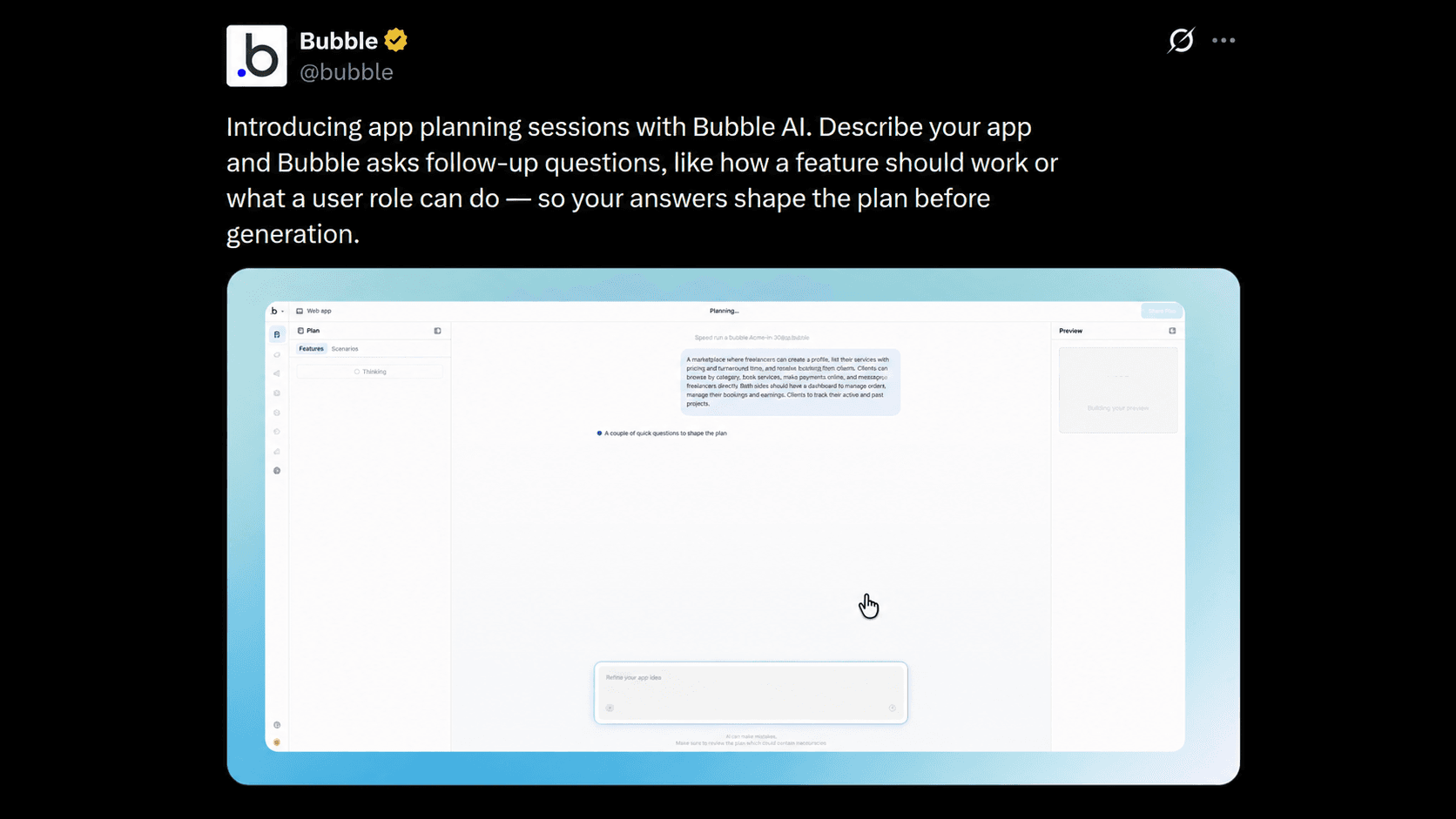
Bubble Just Made AI App Building a Lot More Collaborative
Bubble's new app planning sessions let AI ask clarifying questions about your features and user roles before generating anything -- turning app generation into a real conversation instead of a guessing game.
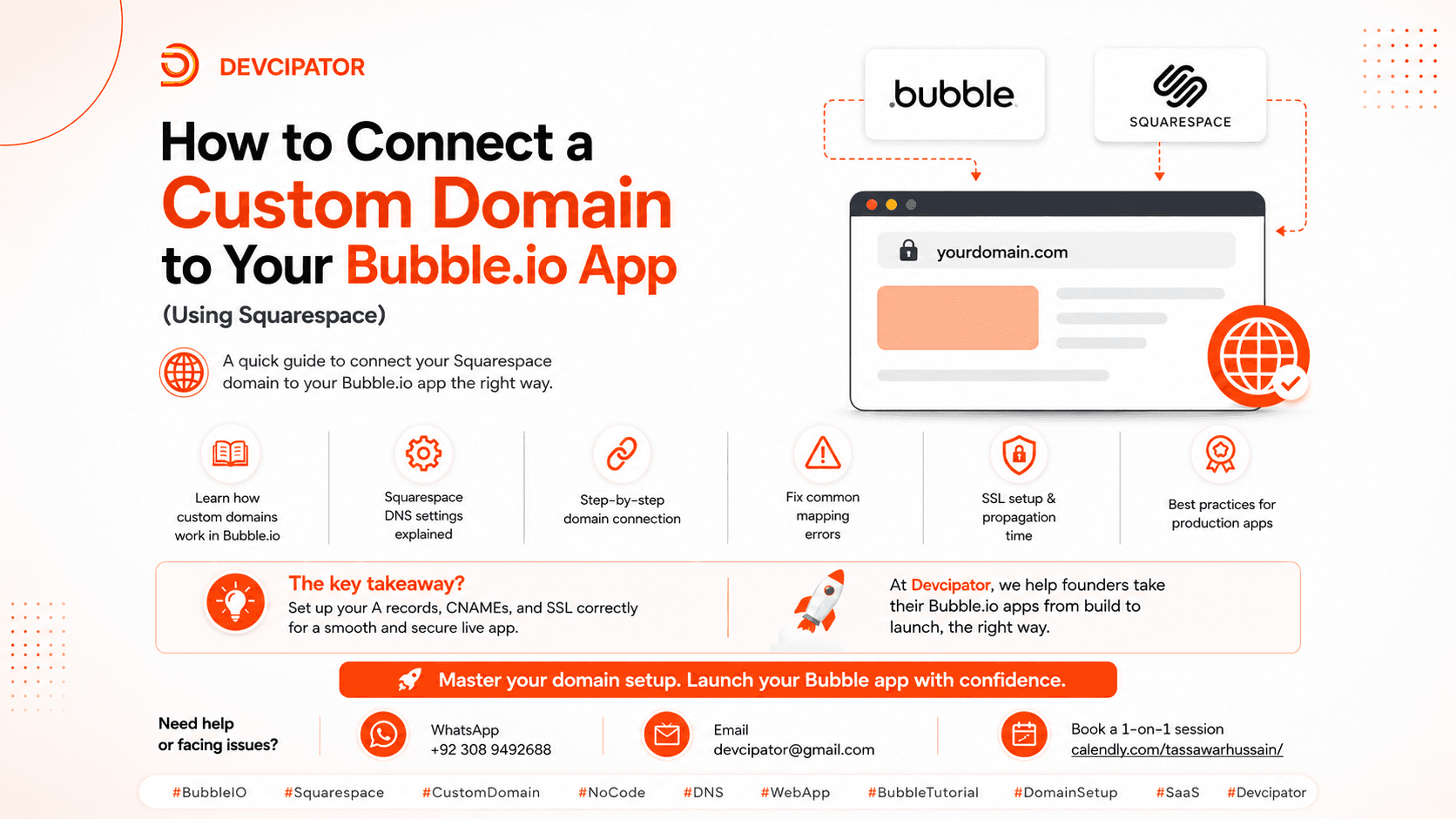
How to Connect a Custom Domain to Your Bubble.io App (Using Squarespace)
Launching your Bubble.io app is only half the job - going live with a custom domain is what makes it feel like a real product. Here's exactly how to connect a Squarespace-registered domain to your Bubble.io app, from DNS records to SSL setup.